Anaerobic threshold: the key pace almost nobody trains properly
What the anaerobic threshold is, how to calculate it without going to a lab, and how to train it with specific sessions by level. A practical guide with data and common mistakes.
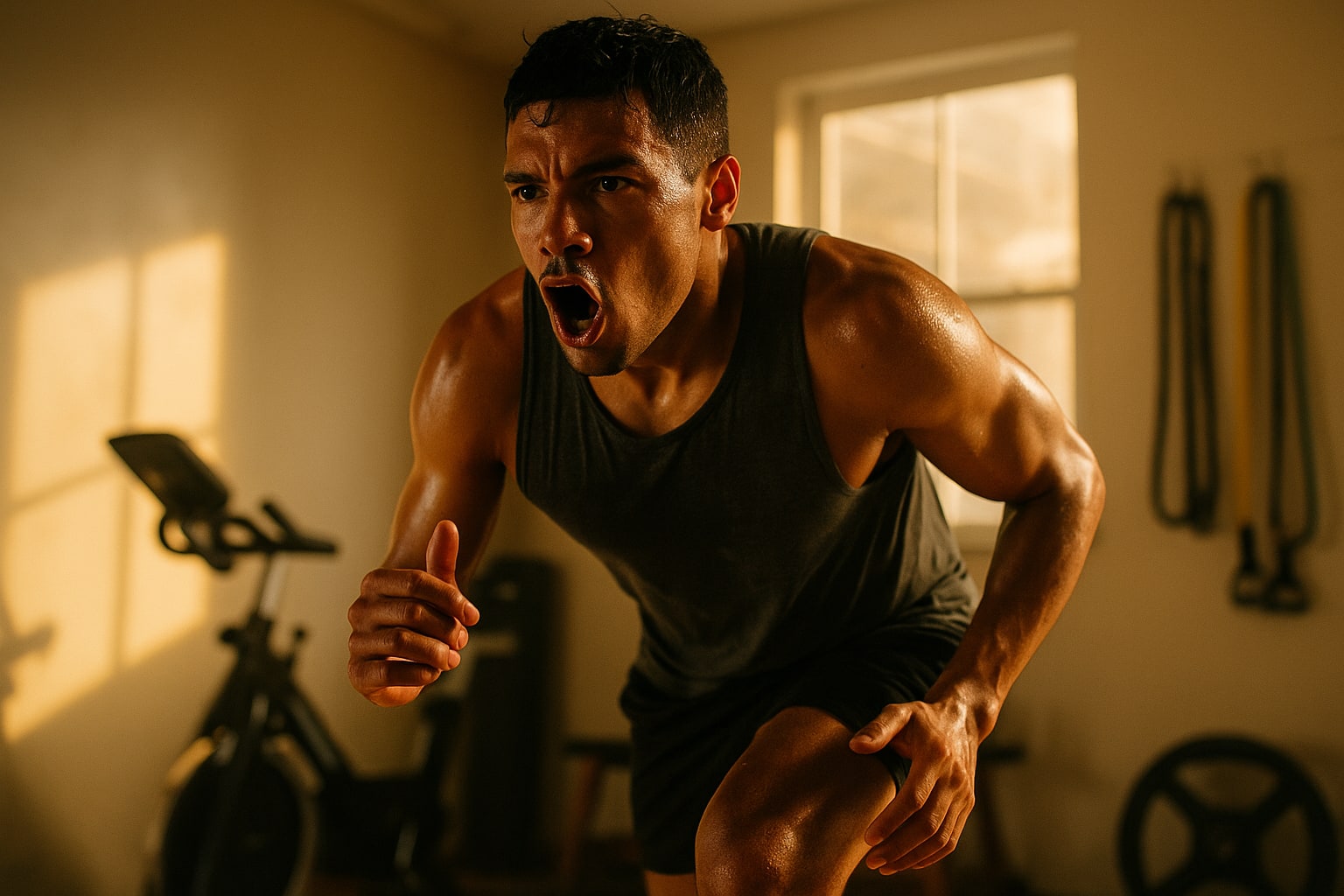
You’re running comfortably, breathing well, and suddenly you pick up the pace a little and everything falls apart within two minutes. That, more or less, is where your anaerobic threshold is. It’s the border between “I can sustain this for half an hour” and “in five minutes I’ll be done”.
This article is for you if you’ve already been running, cycling or rowing for a few months and want to stop training at the same pace all the time. It works whether you’re an advanced beginner (3-4 sessions/week) or at an intermediate level looking to cut your times in a 10K, half marathon or sprint triathlon.
What the anaerobic threshold is
The anaerobic threshold is the intensity at which your body starts accumulating lactate faster than it can clear it. Below it, the aerobic system copes easily. Above it, fatigue rises vertically.
In the literature you’ll also see lactate threshold 2 (LT2), MLSS (maximal lactate steady state) or functional threshold. They aren’t exact synonyms, but for an amateur athlete they behave almost the same: they roughly correspond to the intensity you can maintain for 40 to 60 minutes at full effort.
Aerobic threshold vs anaerobic threshold
These get confused a lot. They are two different things.
- Aerobic threshold (LT1): gentle intensity, lactate ~2 mmol/L. You can talk in long sentences. Easy-run pace.
- Anaerobic threshold (LT2): demanding intensity, lactate ~4 mmol/L (average value, varies by person). You can only get out single words.
Most of your useful training lies between the two. The classic mistake is always running at an in-between pace: not gentle enough to accumulate volume, not hard enough to move the threshold.
Why it’s worth training
Improving your anaerobic threshold means running faster with the same fatigue. It’s the variable that correlates best with performance in races from 10 km to half marathon, even above VO2 max in trained runners (Joyner & Coyle, Journal of Physiology, 2008).
In plain terms: if your threshold is at 5:00 min/km, you’ll run a 10K close to that pace. If you raise it to 4:40, your time drops even though your VO2 max hasn’t changed.
How to calculate your anaerobic threshold without a blood test
Ideally you’d do a lab test with capillary lactate measurement. Since that costs €80-150 and not everyone has access, there are reliable alternatives.
30-minute test (Friel method)
Popularised by coach Joe Friel. It’s the most widely used method in cycling and running.
- Warm up for 15-20 minutes.
- Run or pedal 30 minutes at your maximum sustainable effort, alone and on flat terrain.
- Press “lap” at the 10-minute mark.
- Your average HR over the last 20 minutes ≈ anaerobic threshold HR.
- Your average pace or power over those 20 minutes ≈ functional threshold.
FTP in cycling
In cycling it’s called FTP (Functional Threshold Power): the maximum power you can sustain for one hour. The standard test is to do 20 minutes flat out and multiply the average power by 0.95. It’s an approximation, not an exact measurement.
Estimation by %HRmax
If you don’t want to do a test, use a percentage. The anaerobic threshold usually sits between 85% and 92% of HRmax in trained people. It’s the least accurate of the three estimates (it varies a lot between individuals), but it’s useful for getting started.
Remember: the 220-age formula has an error of ±10-12 beats. Better to use the real HRmax you’ve recorded in a flat-out interval.
Training zones and where the threshold fits
In Friel’s 5-zone model, the anaerobic threshold marks the ceiling of Zone 4.
| Zone | % threshold HR | RPE (1-10) | Use |
|---|---|---|---|
| Z1 | <85% | 2-3 | Recovery |
| Z2 | 85-89% | 4-5 | Long easy run |
| Z3 | 90-94% | 6 | Steady pace |
| Z4 | 95-100% | 7-8 | Threshold |
| Z5 | >100% | 9-10 | VO2 max |
The percentages are of threshold HR, not of HRmax. It’s more precise.
How to train the anaerobic threshold: sessions by level
The basic rule: accumulate 20 to 40 minutes per session at threshold intensity, in intervals or continuous. Once a week is enough for most people.
Beginner (6+ months of running base)
- Continuous tempo: 2 x 10 minutes at RPE 7, with 3 min jogging between blocks.
- Frequency: once every 7-10 days.
Intermediate
- Cruise intervals: 4 x 8 minutes at threshold pace, 2 min jogging.
- Long tempo: 25-30 minutes continuous just below threshold.
Advanced
- Over-under: 5 x 6 minutes alternating 2 min at threshold + 1 min slightly above.
- Total volume at threshold: 35-45 minutes per session.
A specific 15-minute warm-up is non-negotiable in this type of session. Starting cold at threshold intensity is the fast track to a muscle injury.
Common mistakes when training the threshold
- Going too fast. If you finish the session wrecked, it wasn’t threshold, it was Z5. The key is to finish thinking “I could have done one more rep”.
- Doing it too often. Two weekly sessions only if you have a solid base. Three is a recipe for stagnation.
- Not repeating the test. The threshold moves. Recalculate every 6-8 weeks.
- Using a theoretical HRmax. The 220-age formula fails often. Use real data.
- Ignoring context. Heat, poor sleep or stress shift HR by 5-10 beats. On those days, go by RPE.
Medical warning: if you have heart disease, uncontrolled hypertension or are in the postpartum period, don’t do maximal tests without consulting your doctor first. The same applies if you’re returning to activity after an injury.
3 actions to start tomorrow
- Do the 30-minute test this weekend on flat terrain. Note your average HR over the last 20 minutes.
- Schedule one weekly session as a tempo: 2 x 10 min at RPE 7 if you’re starting out, 4 x 8 min if you already have a base.
- Mark in your calendar the next test in 6 weeks. If your average HR rises at the same pace, or your pace rises at the same HR, you’re on track.
Frequently asked questions
Can I calculate the anaerobic threshold without a heart rate monitor?
Yes, using RPE (rating of perceived exertion). The anaerobic threshold corresponds to RPE 7-8 out of 10: you can speak in single words, not sentences. Less precise than HR, but functional.
How often should I repeat the test?
Every 6-8 weeks if you train consistently. Sooner than that and there isn’t enough time for significant adaptations. After more than 3 months, your zones are probably out of date.
Is the anaerobic threshold useful for losing fat?
It isn’t the most efficient intensity for that. To burn fat, Zone 2 pace (aerobic threshold) works better. The anaerobic threshold is for improving performance, not as a main weight-loss strategy.
Why is my threshold different on the bike and running?
Because the sports place different muscular demands. Threshold HR in running is usually 5-10 beats higher than on the bike for the same person. Calculate each discipline separately.
Is the threshold figure my watch gives me reliable?
As an initial guide, yes. Garmin, Polar or Coros watches estimate the threshold by algorithm. The usual error is ±5-8 beats. If you’re training seriously, cross-check it with a field test.