Rotator cuff: exercises to prevent the most common injury
A practical guide with exercises for the rotator cuff, warning signs, and a tiered routine to prevent the most frequent shoulder injury in the gym.
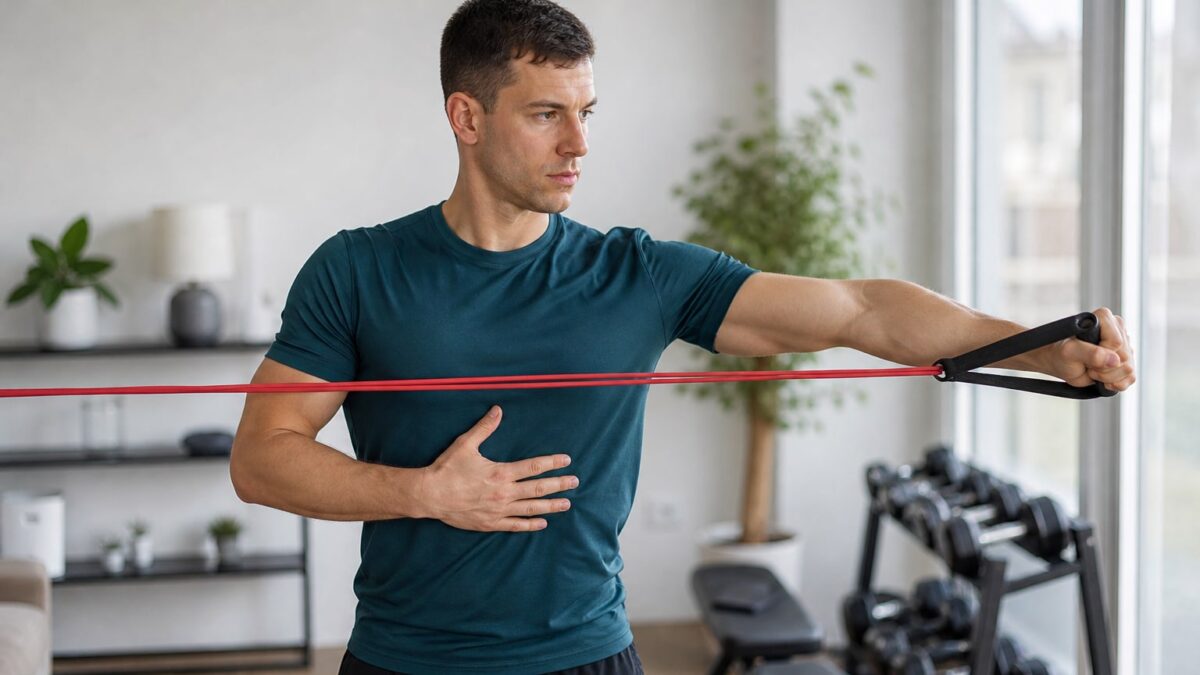
Your shoulder hurts when you do presses or when you swim freestyle, and you don’t know whether it’s temporary or the start of something serious. It is one of the most frequent consultations in sports physiotherapy. The rotator cuff is the area most often injured in people who train regularly, ahead even of the lower back in pushing and throwing sports.
This article is for you if you train 2–5 times a week, lift weights, swim, or play padel, and want to prevent rather than cure. It applies whether you’re a beginner who has never worked this area or you already train strength and want to reinforce it. By the end you’ll have a concrete routine, with sets and reps, and you’ll know how to tell a normal ache from a warning sign.
Why the shoulder gets injured so often
The shoulder is the most mobile joint in the body and, precisely for that reason, the most unstable. It depends almost entirely on muscles to stay in place, unlike the hip, which has more bony support. That extra mobility comes at the cost of vulnerability.
According to a review by Ellenbecker and Cools published in British Journal of Sports Medicine (2010), imbalances between the internal and external shoulder musculature are among the most consistent risk factors for rotator cuff injuries in moderately and highly demanding athletes. You don’t need to be a professional athlete to develop that imbalance: pushing heavily (bench press, push-ups) without training external rotation and pulling in the same proportion already creates it.
The rotator cuff anatomy in simple terms
The rotator cuff is not one muscle but four: supraspinatus, infraspinatus, teres minor, and subscapularis. Together they wrap around the head of the humerus and keep it centered within the shoulder socket while the arm moves.
Their job is not to move heavy loads. It is to stabilize. That’s why the exercises that truly strengthen them use light loads and emphasize control, not maximal muscular fatigue. If you train these muscles as if they were biceps, with heavy loads and few reps, you’re not training what you need.
Warning signs: how to know if you have a rotator cuff injury
Not every shoulder discomfort is the rotator cuff, but there are signs worth watching for:
- Pain when raising the arm between 60° and 120° (the so-called painful arc), which disappears once that range is passed.
- Weakness when rotating the arm outward, for example when combing your hair or fastening your bra from behind.
- Night pain when sleeping on that side, which does not improve by changing position.
- Clicking or a pinching sensation when lifting weight overhead.
- Progressive loss of strength in presses or pulling movements, without acute pain.
If you have two or more of these symptoms for more than two weeks, see a physiotherapist or orthopedic traumatologist before continuing to load the area. A late diagnosis of a partial tear can turn into a full tear that requires surgery.
Tiered rotator cuff exercise routine
The key is to work external rotation, internal rotation, and scapular stability with light loads and controlled movement. A elastic resistance band is enough for most levels; in the gym you can replace it with a low cable pulley.
| Level | Exercise | Sets x reps | Load / RPE | Frequency |
|---|---|---|---|---|
| Beginner | External rotation with band, elbow tucked to the body | 3 x 12–15 | Light band, RPE 4–5 | 3x/week |
| Beginner | Lateral raise with thumbs up | 2 x 12 | 1–2 kg, RPE 4 | 3x/week |
| Intermediate | External rotation on low cable or band, arm at 90° | 3 x 10–12 | RPE 6 | 2–3x/week |
| Intermediate | Face pull with rope or band | 3 x 12–15 | RPE 6 | 2x/week |
| Advanced | Slow eccentric external rotation (3–4 sec lowering) | 3 x 8–10 | RPE 7 | 2x/week |
| Advanced | Overhead press with pause in final external rotation | 3 x 6–8 | RPE 7–8 | 1–2x/week |
At home you can do everything with a medium-resistance elastic band. Outdoors, replace the pulley with a band tied to a bar or railing. In the gym, the low cable pulley lets you better control the rotation angle.
If you want to prepare the joint before any strength session, this 10-minute joint mobility routine can help; it includes shoulder circles before the specific rotator cuff work.
Common mistakes and contraindications
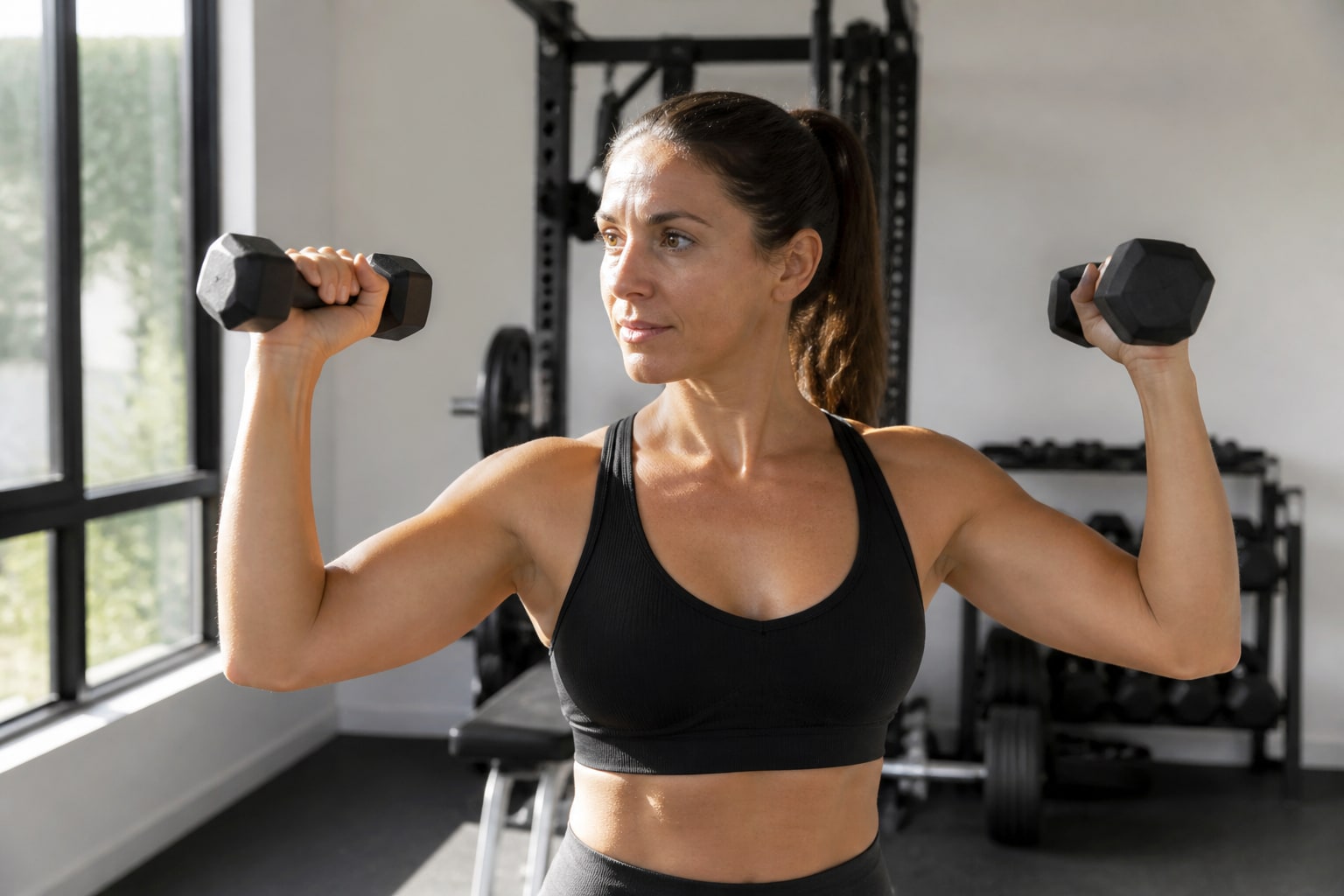
- Using too much load. The rotator cuff works with light loads. If you notice you’re compensating with the whole shoulder or your back, you’re using more weight than you should.
- Skipping the specific warm-up. Going straight into bench press without activating the external rotators is the gateway to subacromial impingement.
- Training through sharp pain. If there is stabbing pain, it is not “normal” — it’s a sign to stop. A dull ache after exercise that subsides within 24–48 hours can be normal.
- Ignoring asymmetry between arms. If you notice more strength or range on one side, work the weaker side first before equalizing loads.
- Returning too quickly after an injury. If you’ve had a shoulder injury, don’t resume the same volume as before. This guide on how to return to training after an injury without relapsing explains how to progress without rushing.
If you are pregnant, have a history of shoulder dislocation, or have diagnosed osteoarthritis, consult your doctor before starting any strengthening routine, even with light loads.
What to do tomorrow
- Do 3 sets of 12 reps of external rotation with a band before your next pushing session (presses, push-ups).
- Check whether you have any symptom from the warning list. If so, book an appointment with a physiotherapist this week, not “when it gets worse.”
- Add face pulls or cable external rotation twice a week for at least 6 weeks before judging whether the discomfort has improved.
FAQ
How long does it take for a rotator cuff injury to heal?
It depends on the grade. Mild tendinopathy can improve in 4–8 weeks with targeted exercise. A partial tear may need 3–6 months of rehabilitation. Complete tears sometimes require surgery, and the timeline is longer.
Can I keep training chest and back if I have rotator cuff discomfort?
If the pain is mild and doesn’t worsen during exercise, you can reduce load and range of motion. If the pain is sharp or increases with movement, stop training that area until you’ve had it assessed by a professional.
Is an elastic band enough, or do I need weights?
For prevention, the band is sufficient at most levels. For advanced rehabilitation or maximal strength, some protocols add light dumbbells or cables, always with low loads.
How many times a week should I train the rotator cuff?
2 to 3 times a week is enough for most people who train strength or pushing sports. Training it daily with light loads is also safe, but according to the available evidence it provides no extra benefit.
Is shoulder pain when swimming a rotator cuff problem?
It is one of the most common causes in swimmers, especially in freestyle and butterfly. If the pain always appears in the same phase of the stroke, it’s worth reviewing technique and rotator strength with a specialist.
As an Amazon Associate, I earn from qualifying purchases.


0 comments · Comment