Eating out without wrecking your week: practical criteria
Clear, realistic criteria for eating out without sabotaging your weekly diet. Proven strategies for any kind of restaurant.
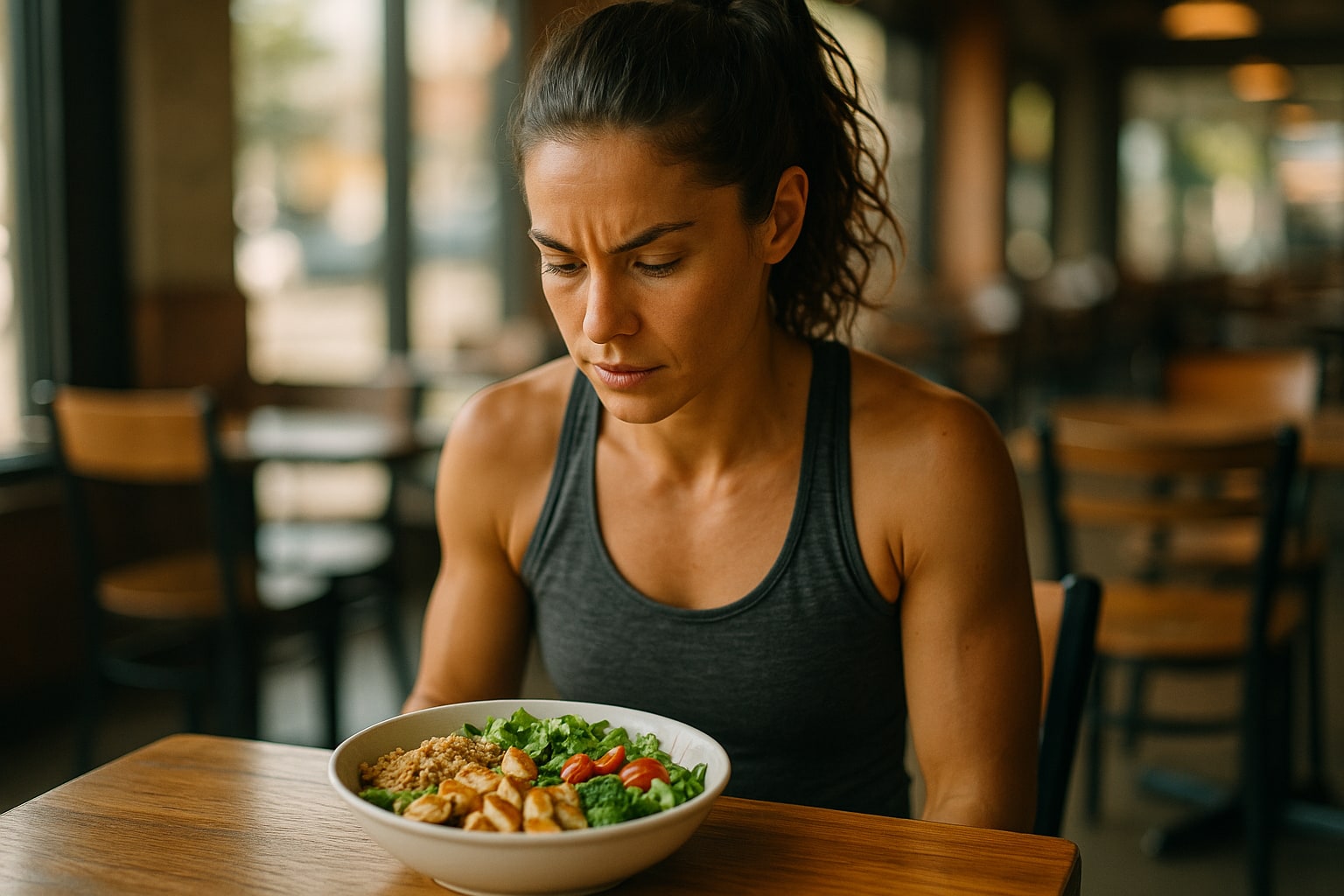
You eat out two or three times a week and feel like all your hard work goes down the drain there. You don’t want to order a sad salad when everyone else is ordering patatas bravas, and you don’t want to wake up with a calorie hangover every Monday. The good news: you don’t have to choose between enjoying yourself and taking care of yourself.
This article is aimed at adults who look after their diet without being fanatics, with an active social life, work lunches or frequent dinners out. Level: anyone. You don’t need to count macros to apply this.
Why eating out doesn’t have to ruin your week
Eating out doesn’t make you fat. What makes you fat is the repeated pattern, not a specific meal. One day of 3,000 kcal won’t move the needle if the rest of the week you’re at your maintenance level.
The real problem is twofold: restaurant portions are usually 20-40% larger than home-cooked ones (USDA data on standard portions), and we tend to combine starter + main course + dessert + alcohol in the same meal. If you read to the end, you’ll walk away with concrete criteria for ordering well from any menu, without becoming unbearable to the waiter.
Basic criteria before looking at the menu
Before opening the menu, decide two things:
- How many meals out you’re going to have this week. One is context; five is your baseline diet.
- What role this particular meal plays. Is it a birthday dinner or the Tuesday set lunch?
If you eat out 4-5 times a week, you can’t treat each one as an exception. Then the criteria need to be systematic. If it’s once, relax more.
Useful rule: arrive with a reasonable appetite, not starving. Skipping meals before a heavy dinner usually ends in uncontrolled nibbling on bread and doubled portions.
How to structure the plate: the 50-25-25 rule
This works for almost any restaurant:
- 50% vegetables or salad (side dish, starter, or on the plate).
- 25% protein (meat, fish, egg, legumes, tofu).
- 25% carbohydrate (rice, pasta, bread, potato).
It’s not a law of physics. It’s a quick visual reference. At a Japanese restaurant it might be sashimi + edamame + a little rice. At a steakhouse, entrecôte + salad + some potatoes (not the whole portion). At an Italian place, pasta + a shared salad + added protein if the pasta comes on its own.
Strategies by type of restaurant
Italian
Order pasta with a tomato or vegetable base rather than carbonara or four cheeses (an easy difference of 400-600 kcal per dish). Share the pizza and add a salad. Focaccia and the complimentary bread add up quickly: ask for it to be taken away if you know you snack without thinking.
Asian (Japanese, Chinese, Thai)
Japanese is one of the easiest: sashimi, edamame, soups, grilled gyozas. Watch out for sweet sauces (teriyaki, sweet and sour) and tempura, which multiply the calories. In Thai and Chinese, order steamed white rice instead of fried and sauces on the side.
Spanish and tapas
The tapas format is a comfortable trap: it seems like little, and you add up five. Choose 2-3 and add a salad or roasted peppers. Octopus, prawns, marinated anchovies, tortilla, cured ham, grilled vegetables: good choices. Croquettes, fried squid, bravas: delicious, but pick one, not three.
Set lunch menu
The classic. Starter with vegetables or legumes, main course grilled or baked, fruit for dessert. If the starter is heavy (fabada, lentils with chorizo), lighten the main course. The bread and wine included in the menu are optional, even though nobody tells you that.
Fast food
There is a decent way to eat here. A simple burger + salad instead of fries, or a grilled chicken wrap. Avoid XL menus and sugary soft drinks: a large meal can easily reach 1,200-1,500 kcal.
Drinks, starters and dessert: the three weak points
This is where most people lose control.
- Drinks: water by default. If you drink alcohol, 1-2 glasses of wine or a beer. Each glass of wine is ~120 kcal, a third-litre beer ~130 kcal. Mixed drinks with sugary soft drink easily pass 250 kcal.
- Starters: choose one to share, not one per person. The bread while you wait is where most people snack without realising it.
- Dessert: if you fancy it, share it. Half a portion of cake satisfies almost as much as the whole one. Fruit and a plain coffee are valid options if you genuinely want them, not as a punishment.
Common mistakes when trying to eat “healthy” out
- Ordering a Caesar salad thinking it’s light. With breaded chicken, croutons, bacon and dressing it can exceed 800 kcal.
- Compensating by skipping meals the next day. It doesn’t work physiologically or behaviourally. Go back to your normal pattern and that’s it.
- Obsessing over “eating clean” and ending up eating half the bread on the table out of anxiety.
- Ordering “with nothing” (no sauce, no bread, no dessert) when you’re at a celebration. If you’re uncomfortable for the whole meal, you’re doing something wrong.
- Drinking on an empty stomach before the meal arrives. Alcohol boosts appetite and lowers your filter.
If you have a digestive condition, diabetes, hypertension or are pregnant, some criteria change (sodium, alcohol, raw fish). Consult your doctor or a registered dietitian-nutritionist.
What to do tomorrow
- Look at your week and count how many meals you’ll have out. If it’s more than three, apply the 50-25-25 rule in at least two of them.
- Choose your default drink before you sit down: water, and decide whether there will be alcohol or not. Deciding on the fly usually ends in three beers.
- Practise asking for a side swap: salad or vegetables instead of fries. It’s free and almost every place does it.
Frequently asked questions
How many times a week can I eat out without gaining weight?
It depends on what you order and your total intake. If you apply basic criteria, you can eat out 3-5 times a week without gaining weight. The problem isn’t the frequency, it’s accumulating high-calorie dishes + alcohol + dessert at each meal.
Is it better to skip a meal if I’m having dinner out?
No. Arriving extremely hungry increases total intake at dinner and pre-dinner snacking. Have a normal meal, maybe somewhat lighter if dinner is going to be heavy, but don’t eliminate it.
What should I order at a restaurant if I’m trying to lose weight?
Prioritise lean protein + plenty of vegetables + a moderate portion of carbohydrate. Sauces on the side, water to drink, and decide beforehand whether you’ll have dessert or alcohol (choose one, not both). You don’t need to order unusual things: the regular menu offers options.
Does alcohol ruin a healthy meal?
It doesn’t ruin it, but it adds empty calories and lowers your restraint around food. One or two occasional drinks fit into a balanced diet. The problem is frequency: 3-4 drinks several times a week does affect weight and sleep (consistent evidence on alcohol and sleep quality).
Are restaurant “healthy” menus really healthy?
Not always. Many dishes labelled “light” or “fit” come with sauces, dressings or fried elements that add calories. Trust the dish description (grilled, baked, steamed, with vegetables) more than the name of the section on the menu.