Running GPS watch: which metrics coaches actually look at
A running GPS watch gives you dozens of data points, but only a handful help you train better. Here's which metrics coaches prioritize and which ones are hype.
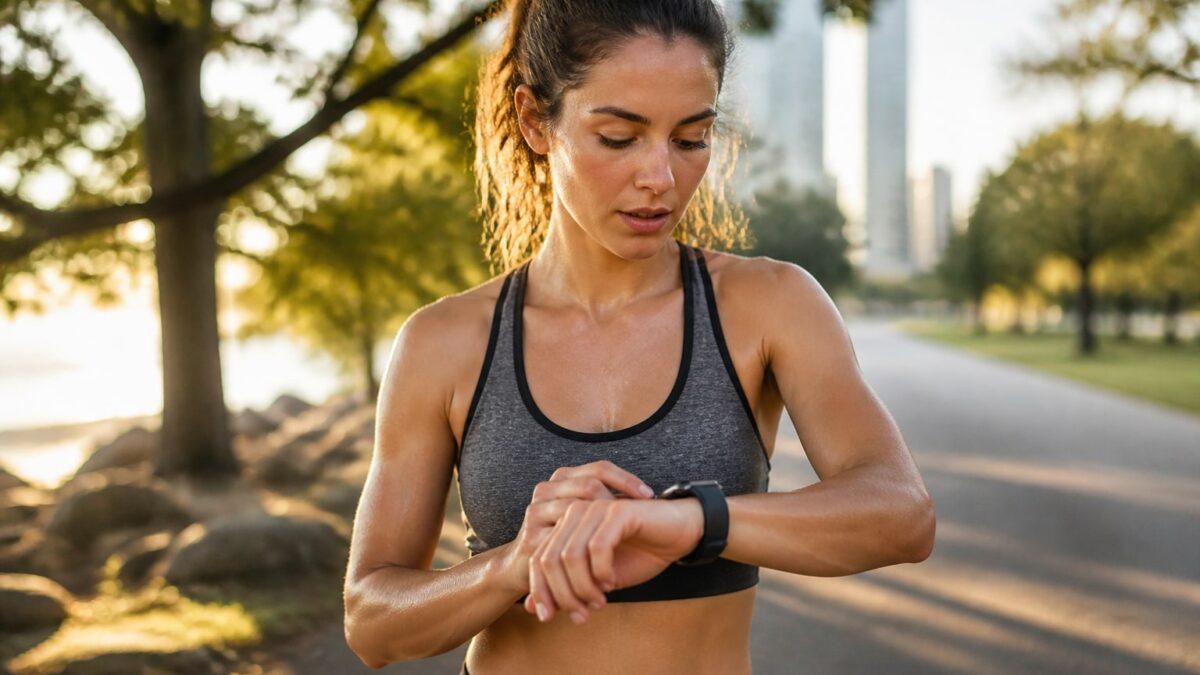
You have a watch with a screen full of numbers. Pace, cadence, estimated VO2 max, “fitness age”, training load, stress, body battery… and the question is always the same: which ones really matter and which are just marketing?
This article is for beginner and intermediate runners who already run 2-4 days a week and want to use their watch to train better, not just to record the session. If you’re an advanced athlete with a coach, you probably already have this clear.
Why a GPS watch changes how you train (and why it can confuse you)
A running GPS watch used well gives you three things: real-time control of intensity, a history to track progress, and data to plan your training load. Used badly, it turns you into a slave to a number that doesn’t mean what you think it does.
The problem isn’t the watch. It’s that brands compete to add new metrics every year, and most of them are estimates derived from other estimates. Coaches look at only a few things, but they look at them well.
The metrics coaches actually use
Here’s the summary before we go into detail:
| Metric | What it’s for | Reliability |
|---|---|---|
| Pace (min/km) | Controlling intensity on easy runs and intervals | High |
| Heart rate | Dosing real effort | High (with chest strap) |
| HR zones | Planning sessions by intensity | High |
| HRV (variability) | Seeing recovery and accumulated fatigue | Medium-high |
| Running power | Controlling effort with wind/hills | Medium |
| Cadence | Detecting inefficient technique | High |
| Estimated VO2 max | Long-term trend | Low-medium |
Pace and pace zones
The basics and the most reliable. Current GPS has an error of 1-3% on open terrain. For easy runs, long runs and intervals on track or asphalt, pace is what counts.
What coaches look for: that you respect the assigned pace in each session. If the easy run is at 6:00/km and you go at 5:20 because “I felt good”, you’re breaking the logic of the plan.
Heart rate and zones
HR is the queen metric for dosing effort. But with two warnings:
- The optical wrist sensor fails on short intervals and in the cold. For intervals, a chest strap (Polar H10, Garmin HRM-Pro, Wahoo TICKR) is almost mandatory.
- Zones based on a percentage of estimated max HR (220 – age) are approximate. It’s better to do a field test or use the Karvonen formula with your real resting HR.
The 5 classic zones run from Z1 (very easy, can chat) to Z5 (maximum effort, sustainable for 1-5 minutes). If you don’t know which zone you’re training in, check how to measure intensity with RPE as a complement to the heart rate monitor.
HRV (heart rate variability)
HRV measures the variation between heartbeats. Broadly: high HRV means a recovered nervous system; sustained low HRV means fatigue or accumulated stress.
Evidence supports its use to adjust training load day to day (Düking et al., 2021, Frontiers in Physiology), but with nuances: it must be measured always at the same time, ideally on waking, and you should look at the 7-14 day trend, not a single data point. Garmin, Whoop, Polar and Oura measure it overnight with reasonable reliability.
Running power
As in cycling, but younger and less standardized. Power (watts) doesn’t depend on terrain or wind, so for training on hills or on windy days it is more honest than pace.
Stryd (foot sensor) is the reference; Garmin and COROS estimate it from the watch with less precision. Limited evidence on whether training by power improves results compared with training by heart rate in recreational runners.
Cadence
Steps per minute. The “ideal” is around 170-180 spm at easy pace, but it depends on your height and stride. What’s useful is seeing whether your cadence drops a lot when you get tired: this usually indicates overstriding and increased impact on the knee and shin.
Estimated VO2 max and “fitness age”
Here’s where the actionable meets the decorative. The estimated VO2 max from the watch has an error of ±3-5 ml/kg/min compared with a lab test (Passler et al., 2019). It works as a 3-6 month trend. As an absolute number to show off, it doesn’t.
“Fitness age”, “body battery”, “stress score” and similar are proprietary algorithms with no published external validation. They’re fine as guidance, but no coach plans with them.
Metrics you can (almost) always ignore
- Calories burned: usually a 20-30% error.
- Fitness age: marketing.
- Generic sleep scores: useful as a trend, useless as a single data point.
- Suggested recovery time: a very conservative estimate; ignore it if it contradicts how you feel.
Common mistakes when using a GPS watch
- Checking the screen every 20 seconds on easy runs. It breaks your running economy and creates anxiety.
- Trusting VO2 max as real progress. If you change watches, the number changes. Use marks from 5K or 10K tests instead.
- Always training by pace and ignoring HR. In summer or when fatigued, the same pace means a much greater effort.
- Artificially chasing a 180 spm cadence. It forces a technique that isn’t yours and increases injury risk.
- Ignoring HRV when it has been low for 5 days. It’s usually the first sign of overtraining.
If you have heart disease, an arrhythmia or are pregnant, don’t use standard HR zones without first consulting your doctor or sports cardiologist.
What to do this week
- Set up 2 screens, not 6. One for easy runs (pace, HR, time) and one for intervals (lap pace, HR, interval).
- Do a real max HR test (or ask your doctor for a stress test) and recalculate your zones. The default ones are estimates.
- Look at the 7-day HRV trend, not today’s number. If it drops consistently, reduce the load before you break down.
Frequently asked questions
Do I need a chest strap if the watch already measures pulse?
For easy runs and long runs, the optical sensor is fine. For short intervals, speed work and the gym, a chest strap is more accurate (error <1% vs 5-10% for optical in those scenarios).
Which GPS watch should I buy for 200-300 €?
In that range, the Garmin Forerunner 55/165 series, the COROS Pace 3 and the Polar Pacer give you all the essentials: reliable GPS, HR, zones, estimated VO2 max and nighttime HRV. Above 400 € you’re mostly paying for maps, multi-band GPS and battery life.
Does running power replace heart rate?
No, they complement each other. Power measures what you do (mechanical effort), HR measures how your body responds. On flat ground without wind, HR and pace are enough for most people.
Why does my VO2 max drop when I’m training more?
It usually happens due to accumulated fatigue or heat (HR rises for the same pace and the algorithm reads it as loss of fitness). Look at the 2-3 month trend, not the week.
Can I train with RPE only, without a watch?
Yes, many runners do and perform well. The watch helps make things objective, but a well-calibrated RPE is a valid and free tool.
0 comments · Comment