How to Protect Your Lower Back When Strength Training: Technique and Common Mistakes
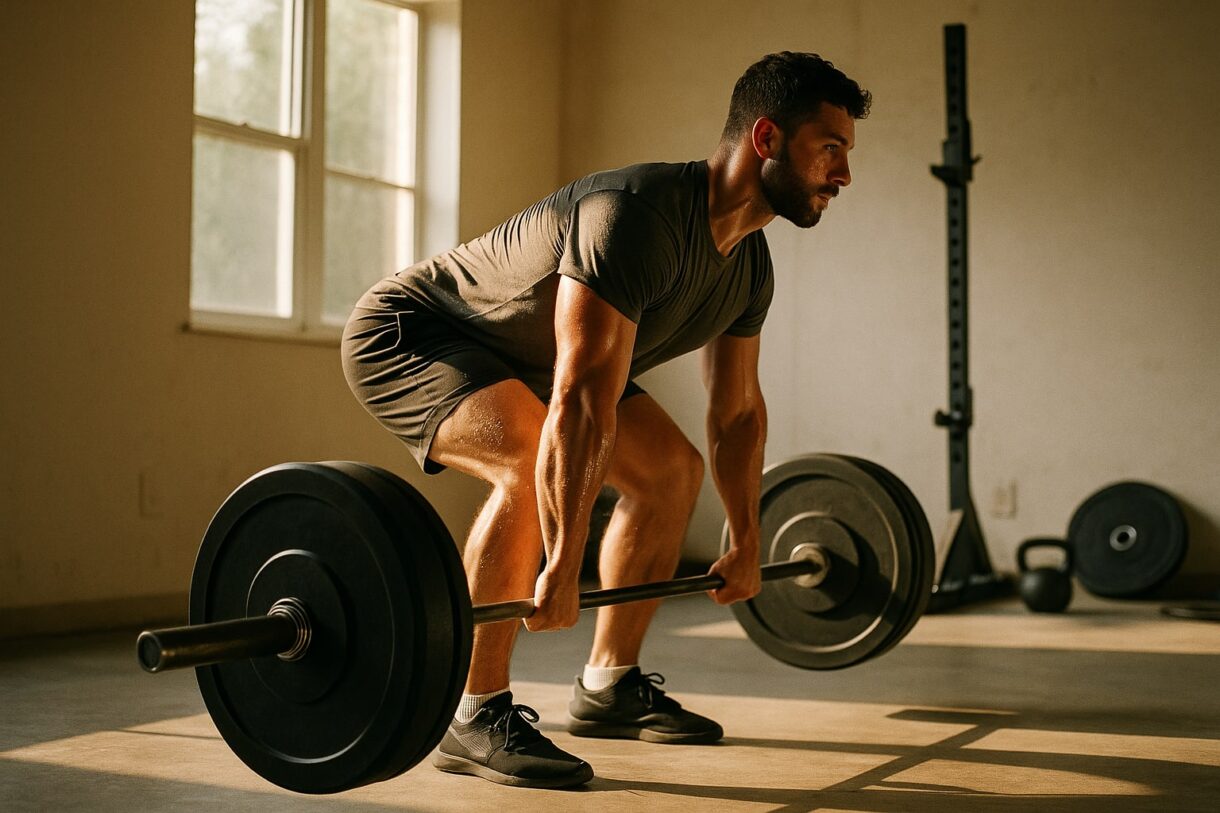
If you do strength training more than two or three days a week, sooner or later the question comes up: “Am I wrecking my back?” Sometimes it’s a sharp twinge during the last set of deadlifts. Other times, it’s a dull ache the next day that you can’t trace back to anything. The lower back can take a lot, but it also warns you when your technique is failing.
This article is for you if you train in a gym or at home with weights, you’re somewhere between beginner and intermediate-advanced, and you want to keep progressing without ending up on the physio’s table. It’s not a treatise on biomechanics. It’s what you need to know to lift more weight with less risk.
Why the lower back is vulnerable when strength training
The lumbar spine is designed to transmit forces, not to generate them repeatedly under load. When you do a squat or a deadlift, your trunk works like a rigid bridge between the load and your hips. If that bridge loses rigidity—because your back rounds, because you don’t breathe properly, because your hips don’t move—the stress concentrates on the lumbar discs and ligaments.
The good news: most lower back discomfort in the gym is muscular and avoidable, not structural. A review by Owen et al. (2020, British Journal of Sports Medicine) confirms that well-designed strength training reduces chronic low back pain rather than increasing it. The key is in how you do it.
The three fundamentals: neutral spine, bracing, and hip hinge
Neutral spine position
Neutral doesn’t mean “as straight as a board”. It means maintaining your spine’s natural curves (cervical, thoracic, and lumbar) during the exercise. Neither exaggerated hyperextension nor rounding. A side mirror or filming yourself with your phone will give you more information than any internal sensation.
Abdominal bracing (not “sucking in your gut”)
Bracing means tensing the entire abdominal wall 360°, as if you were about to take a punch. It’s not pulling in your navel or puffing out your chest. It’s combined with the Valsalva maneuver: you inhale deeply through your nose, hold the air, perform the rep, and exhale at the end or during the easy part of the movement. This increases intra-abdominal pressure and stabilizes the spine.
If you have uncontrolled hypertension, glaucoma, or cardiovascular problems, consult your doctor before using the Valsalva maneuver with heavy loads.
Hip hinge
The hinge is the pattern of moving your hips backward while keeping your spine neutral and your knees slightly bent. It’s the foundation of the deadlift, the good morning, and the barbell row. If you can’t master the hinge without weight, you won’t do it with 100 kg on your back. Practice it with a broomstick held against your head, upper back, and sacrum: all three points should stay in contact throughout the entire range of motion.
Correct technique in the key exercises
Squat
- Feet: shoulder-width or slightly wider, toes turned slightly out (15–30°).
- Descent: hips and knees move at the same time. Knees track in line with your feet.
- Depth: as low as you can while keeping your spine neutral. If “butt wink” (pelvic tuck) appears, you’ve gone too far.
- Gaze: forward or slightly down. Never at the ceiling.
Conventional deadlift
- Bar against the shin from the start.
- Hips higher than the knees, lower than the shoulders.
- Active lats: imagine you’re “crushing oranges in your armpits” before pulling.
- Push through the floor, not a pull with your back. The bar rises because your legs push you away from the floor.
Barbell row and overhead press
In the row, the typical mistake is pulling with the lower back. Set the hinge, trunk at about 30–45° to the floor, and row with your elbows. In the overhead press, squeeze your glutes and abs to avoid hyperextending the lumbar spine as the bar passes over your head. If you need to arch a lot, it means you have limited shoulder mobility or lack core stability.
Core and lumbar stability: what to really train
The core isn’t just abs. It includes the rectus abdominis, obliques, transversus, multifidus, pelvic floor, and diaphragm. For the lower back, the most useful exercises are anti-extension, anti-rotation, and anti-lateral flexion:
- Front plank: 3 x 30–45 s.
- Pallof press with band: 3 x 10 per side.
- Dead bug: 3 x 8–10 per side.
- Bird dog: 3 x 8 per side.
Two sessions per week are enough. If you want to go deeper into how much work to dedicate to each muscle group, you have a guide on weekly volume per muscle group that fits right here.
Hip and ankle mobility: the forgotten piece
If your hip has no range of motion, your lower back will make up for it. And that’s how discomfort appears. Two quick tests:
- Deep bodyweight squat: can you reach the bottom with your heels flat and your spine neutral?
- Lying hip flexion: can you go past 90° without your lower back lifting off the floor?
If you fail, dedicate 10 minutes, 3–4 times a week, to hip mobility (90/90, frog, rotations) and ankle mobility (dorsiflexion against a wall).
Lifting belt: when yes and when no
A lifting belt is not a substitute for having core strength. It increases intra-abdominal pressure and can allow you to move 5–15% more weight according to work by Lander et al. It’s justified for:
- Heavy sets above 80% of your 1RM.
- Deadlifts, squats, and overhead presses with high loads.
Don’t use it for warm-ups, light sets, or accessory exercises. And don’t cinch it to the maximum: it should let you push against it, not passively compress you.
Common mistakes that punish the lower back
- Rounding the back on the deadlift to reach the bar. If you can’t reach it with a neutral spine, raise the bar with plates.
- Hyperextending the lumbar spine in presses and squats due to lack of bracing or shoulder mobility.
- Not breathing: exhaling on the way down in a squat loses all intra-abdominal pressure.
- Jumping straight to heavy loads without warming up the posterior chain. A good warm-up measurably reduces the risk of injury.
- Training through acute lower back pain: mild post-exercise soreness is normal; a sharp pain radiating down the leg is not. That’s when it’s worth checking whether lower back pain is muscular or when to see a doctor.
Medical warning: if you have a diagnosed herniated disc, spondylolisthesis, are pregnant, or have pain radiating to the legs, do not apply these guidelines without prior evaluation by a physiotherapist or sports medicine doctor.
Three concrete things to do tomorrow
- Record a set of squats and deadlifts from the side with your phone. Check neutral spine and depth.
- Add 10 minutes of anti-rotation core work (Pallof, dead bug, bird dog) two days a week.
- Practice the hinge with a broomstick before your next deadlift: 2 sets of 10 reps without load.
Frequently asked questions
Should I use a lifting belt from the start?
No. First learn to brace without a belt using moderate loads (up to 70–75% of your 1RM). Introduce it when you work heavy sets above 80%. Using it all the time may weaken active stabilizing capacity in the long run, although the evidence is limited.
Is the deadlift dangerous for the back?
Not in itself. It’s dangerous if performed poorly or with disproportionate loads. Done well, the deadlift strengthens the entire posterior chain and protects the lower back. Progression should be gradual: increase the load only when your technique stays flawless across all reps.
My back hurts the day after training legs, is that normal?
A slight muscle fatigue in the spinal erectors can appear if you’ve done a lot of squat or deadlift volume. It should go away within 24–48 h. If it’s a stabbing pain, if it radiates to the glutes or leg, or if it lasts more than three days, stop and consult a professional.
Can I do strength training if I already have chronic lower back discomfort?
In many cases, yes, and in fact it helps. Studies such as Kristensen and Franklyn-Miller (2012) show improvements in chronic low back pain with well-designed strength training. But you need a prior evaluation and individualized progression. Don’t self-manage a program if you’re coming back from an injury.
Is the squat or the deadlift better for the back?
Neither is “better”. They train different patterns: the squat emphasizes quadriceps and glutes with knee flexion, the deadlift the posterior chain with hip dominance. Ideally, include both, adjusting volume and frequency to your level and recovery.
Fitness Healthy Living #Entrenamiento de fuerza #fitness #prevención lesiones #salud lumbar #técnica levantamiento

 Everything you need to know about muscle memory
 Entrenamiento HIIT: 5 ejercicios para hacer en casa
 Combinar entrenamiento en casa y al aire libre
Comentarios cerrados