Sleeping little and training: what you actually lose in performance and recovery
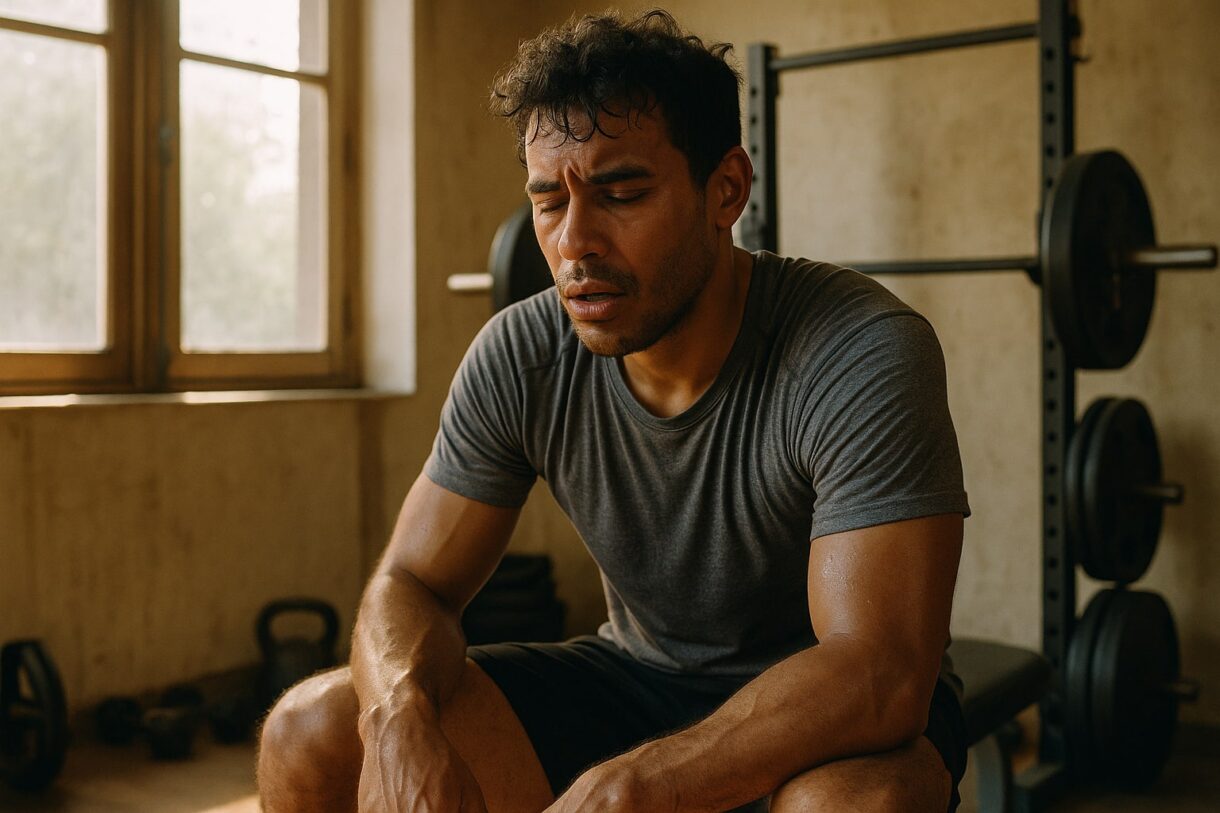
Yesterday you slept five hours. Today you have training. The question is always the same: do I push through or skip it? The short answer is “it depends”, but we can put numbers to it.
This article is aimed at adults who train between 3 and 6 days a week (mainly beginners and intermediates) and who juggle work, family and sport. We are not talking about elite athletes with a scheduled nap. We are talking about real people who sometimes sleep badly and want to know what they are actually losing.
Why sleep is part of training
When you sleep, your body is not “switched off”. It is repairing muscle fibres, consolidating motor learning and regulating key hormones for performance (testosterone, growth hormone, cortisol). If you cut sleep, you cut recovery. Full stop.
The National Sleep Foundation recommends 7-9 hours for healthy adults. Below 6 hours chronically, measurable effects on strength, endurance and metabolic health begin to appear.
What happens in your body when you sleep little
Hormonal balance is disrupted: cortisol rises, testosterone falls. In a classic study by Leproult and Van Cauter (JAMA, 2011), one week of sleeping 5 hours reduced daytime testosterone in young men by 10 to 15%.
Insulin sensitivity also drops, perceived exertion increases and reaction times slow down. The central nervous system, basically, runs with the handbrake on.
How much strength you lose after a bad night
A single night of 4-5 hours does not wreck your 1RM. The review by Craven et al. (Sports Medicine, 2022) found that maximal strength remains relatively stable after one night of acute sleep deprivation.
What does drop is performance across multiple sets and complex exercises: squat, deadlift, high-rep bench press. Losses are around 5-10% in total volume lifted. In repeated submaximal work, fatigue arrives sooner.
If you do strength training and slept badly, cut the volume by 20-30% and prioritise technique. This is also a good moment to review how to protect your lower back when lifting weights, because motor control worsens when you are fatigued.
How much endurance you lose after sleeping badly
The impact is greater here. A meta-analysis by Craven et al. (2022) showed drops of around 7-11% in endurance tests after partial sleep deprivation. Rating of perceived exertion (RPE) rises: what used to feel like a 6/10 now feels like an 8/10.
In long or threshold sessions, this translates into fewer kilometres at a given pace or stopping earlier. If you are preparing for a race, this is one of the variables that is often ignored in the periodisation of the amateur runner.
Reaction time and coordination: the big forgotten factor
Sleeping 4-5 hours one night worsens reaction time to a degree comparable to a blood alcohol level of 0.05-0.10% (Dawson and Reid, Nature, 1997). In other words: slower reflexes, poorer coordination, greater risk of failing a technical movement.
For ball sports, contact sports or sessions with heavy loads, this matters. A lot.
Muscle recovery: sleep is when the magic happens
The peak secretion of growth hormone occurs in the early phases of deep sleep. If you sleep little, you compress that window. Muscle protein synthesis suffers and muscle soreness lasts longer.
A study by Dattilo et al. (Medical Hypotheses, 2011) already proposed that sleep deprivation reduces muscle repair capacity. Later evidence confirms it: more sleep, more recovery.
Injury risk: the numbers are alarming
In adolescent athletes, Milewski et al. (Journal of Pediatric Orthopaedics, 2014) found that sleeping less than 8 hours multiplied the risk of injury by 1.7. In adults the magnitude is less clear, but the direction is: less sleep, more injuries.
Especially relevant if you are dragging along issues such as shin splints, tendinopathies or rotator cuff problems.
How many hours you need to perform well
- Functional minimum: 7 hours.
- Optimal for most people: 7.5-9 hours.
- If you train hard (5-6 sessions/week): aim for 8-9 hours.
Not everyone needs the same, but below 6 hours habitually, performance and health suffer without exception.
Common mistakes when managing sleep and training
- Training hard after a bad night “out of discipline”. A light or technical session is better.
- Compensating with massive amounts of caffeine. It helps acute performance, but if you take it after 3-4 pm, it worsens that night’s sleep and you enter a loop.
- Scheduling a high-intensity session late. Intense exercise 2-3 hours before bed raises heart rate and delays sleep in sensitive people.
- Ignoring sleep when planning. It is as important as volume or intensity.
- Trying to recover everything over the weekend. It helps somewhat, but it does not make up for 5 consecutive bad nights.
If you have sleep disorders (sleep apnoea, chronic insomnia), consult your doctor before changing training habits.
What to do tomorrow if you slept badly
- Lower intensity and volume by 20-30%. Switch sets to failure for RPE 7. Drop one set per exercise.
- Prioritise technique and mobility. If the plan was a hard strength session or threshold sets, swap it for easy aerobic work or technique.
- Look after the rest of the day: get natural light in the morning, cut caffeine after 3 pm and aim to go to bed 30-60 minutes earlier tonight.
Frequently asked questions
Is it better to skip training if I slept less than 5 hours?
Not necessarily. An easy session may even help you sleep better that night. What is worth avoiding: maximal loads, sets to failure and high-intensity sessions with technical risk.
Does a nap make up for little sleep at night?
It helps, but it does not replace it. A 20-30 minute nap improves alertness and acute performance. 90-minute naps can recover part of the cognitive deficit, but they do not reverse the hormonal and metabolic impact of insufficient night-time sleep.
How long does my body take to recover from a week of poor sleep?
The evidence suggests several days of normal sleep (7-9 h) are needed to recover hormonal and cognitive markers. It is not made up over a weekend, even if you sleep 10 hours on Saturday.
Does melatonin help if I train at night and find it hard to sleep?
At low doses (0.3-1 mg) 30-60 minutes before bed, the evidence supports its use to regulate circadian rhythm, especially with jet lag or shift changes. For general insomnia the effect is modest. Consult your doctor if you use it regularly.
Is it worse for performance to sleep little or to train fasted?
Sleeping little has a greater and more consistent impact. Intermittent fasting affects performance in intense sessions, but it is manageable with planning. Chronic sleep loss compromises recovery, hormones and injury risk in a way that is harder to compensate for.
Fitness Nutrition Healthy Living #Entrenamiento #hormonal #privación de sueño #recuperación deportiva #sueño y rendimiento


 Everything you need to know about muscle memory
 Entrenamiento HIIT: 5 ejercicios para hacer en casa
 Combinar entrenamiento en casa y al aire libre
Comentarios cerrados