Recovery between training sessions: sleep, cold, massage and what actually works
We review which muscle recovery techniques have real scientific backing and which are more myth than science, with concrete data you can apply today.
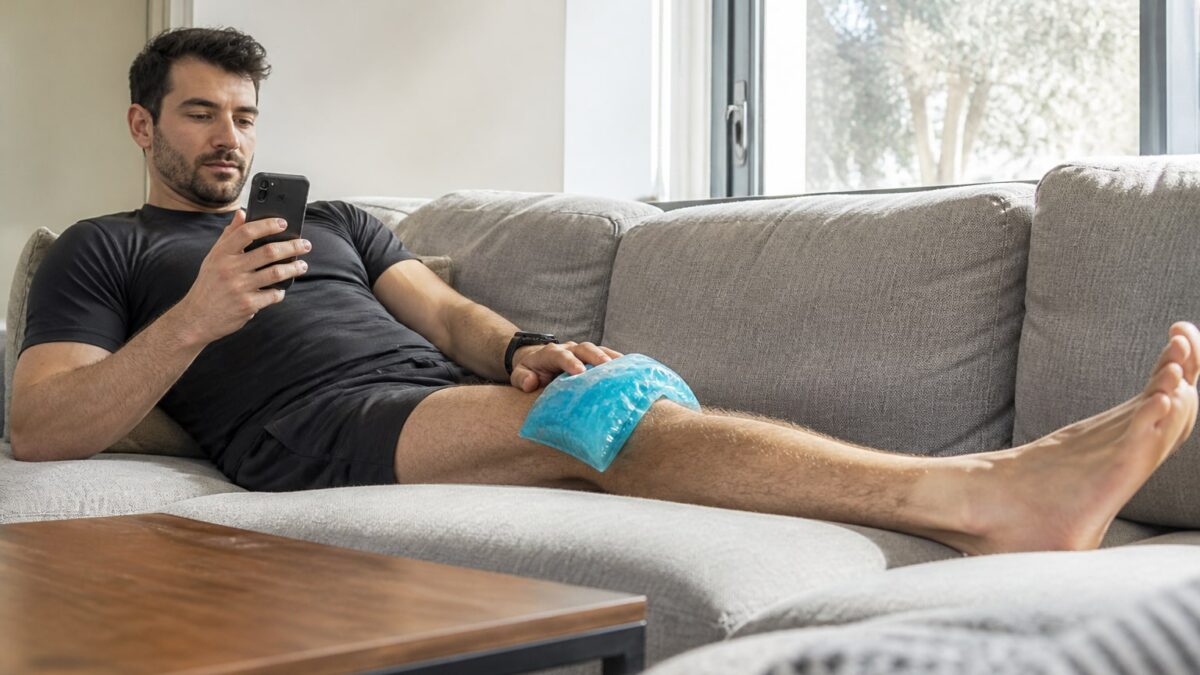
You train three or four days a week, sleep as much as you can, and the next day your legs feel as heavy as if you were carrying sand instead of blood. You wonder whether the ice bath you saw on social media does any good, or whether an extra hour of sleep would be enough. The doubt is legitimate: recovery is the part of training that is least taught and most improvised.
This article is for you if you train regularly (intermediate or advanced level) and want to know which recovery techniques have evidence behind them and which are just noise. If you are a beginner and muscle soreness worries you, you would be better off reading about muscle soreness and whether you should train through it.
Why recovery matters as much as training
The stimulus of training breaks down muscle fibers and depletes glycogen stores. Improvement does not happen during the session, but afterwards, when the body repairs that damage. Without adequate recovery, you accumulate fatigue instead of performance.
By the end of this article you will know how much to sleep if you train hard, whether cold is worth anything, what the evidence says about sports massage, and which supplements have real backing.
Sleep and muscle recovery: the foundation nobody respects
Sleep is, by far, the recovery tool with the most evidence. During deep sleep most of the growth hormone is released, which is key to tissue repair.
A study by Mah et al. (2011, Sleep) with college basketball players showed improvements in sprint times and shooting accuracy after extending sleep to 10 hours a day for several weeks. You don’t need to reach that figure to notice a benefit.
- Beginner (trains 2-3 days/week): at least 7 hours.
- Intermediate (3-4 days, moderate loads): 7-8 hours.
- Advanced (5+ days, high intensity): 8-9 hours, with a 20-30 minute nap if your routine allows it.
Sleeping badly occasionally ruins nothing. The problem is sustained sleep debt, week after week.
Active vs passive recovery: when to move and when not to
Active recovery is gentle movement (walking, easy cycling, swimming at a comfortable pace) on the days following a hard session. Passive recovery is simply not training.
The evidence is moderate: a review by Dupuy et al. (2018, Frontiers in Physiology) found that active recovery helps somewhat more than complete rest in reducing the perception of muscle pain, although the effect on subsequent performance is small.
In practice: if the day after a leg session you feel stiffness but no sharp pain, 20-30 minutes at a heart rate of 100-120 bpm (RPE 2-3 out of 10) usually feels better than being on the sofa all day.
Delayed onset muscle soreness (DOMS): what it is and what does not cure it
DOMS appears 24-72 hours after a new or intense effort, especially with eccentric work (going downstairs, heavy squats, downhill running). It is muscle micro-damage with local inflammation, not lactic acid build-up, as was previously believed.
Nothing “cures” DOMS instantly. What does reduce discomfort: gentle movement, proper hydration and time. It usually resolves on its own between 48 and 96 hours.
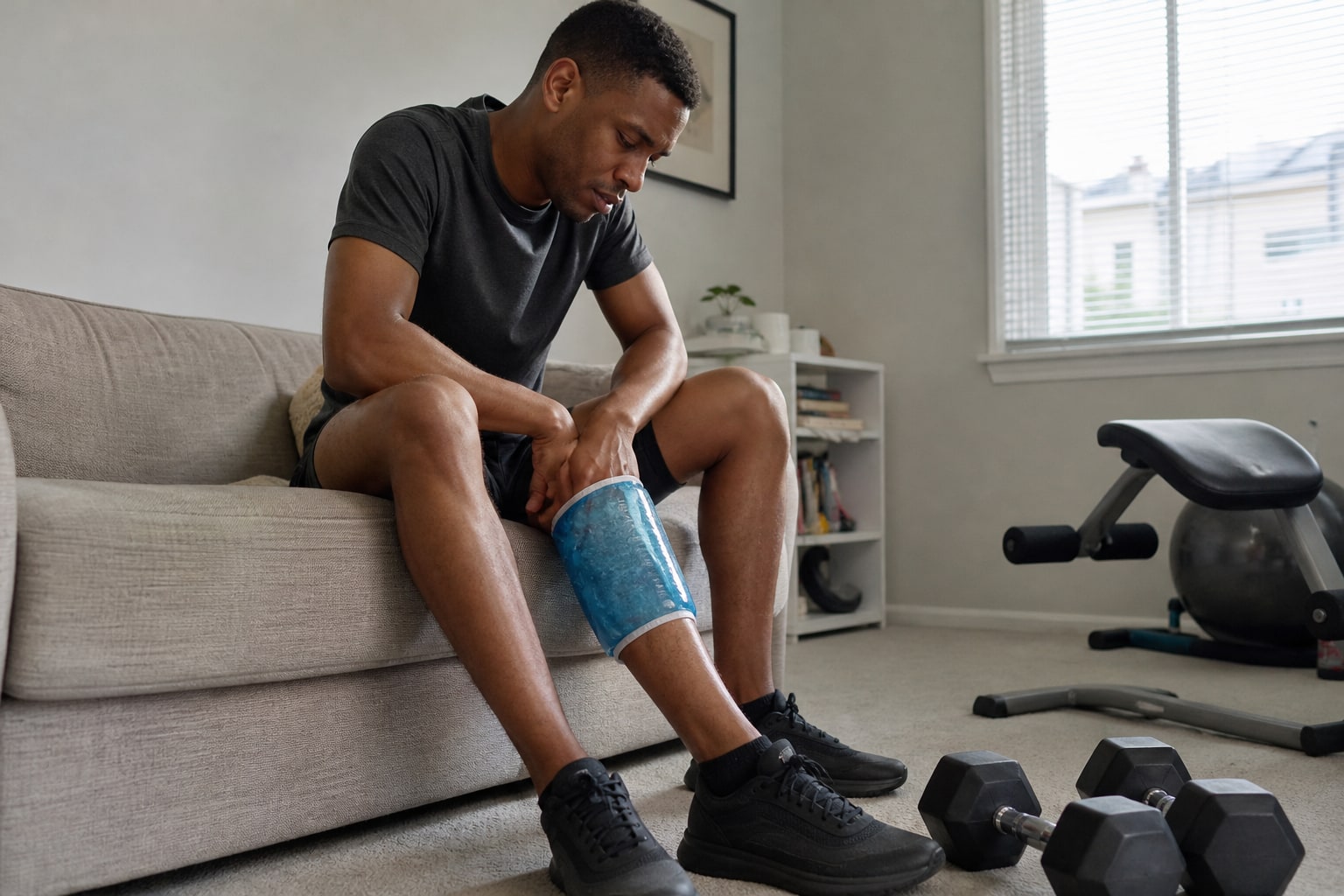
Ice baths and cryotherapy: do they work or is it more myth than science?
Ice baths (10-15 minutes at 10-15 °C) reduce inflammation and the perception of pain in the short term. But here is the important nuance: a Cochrane review (Bleakley et al., 2012) found evidence of limited quality, and later studies suggest that cold may blunt muscle adaptations if applied right after systematic strength training (Roberts et al., 2015, Journal of Physiology).
For runners looking to reduce inflammation after a long run, occasional cryotherapy makes sense. For anyone seeking hypertrophy or strength, using it after every session can be counterproductive.
| Technique | Evidence | Cost/access | When it makes most sense |
|---|---|---|---|
| Sleep 7-9 h | High | Free | Always, top priority |
| Active recovery | Moderate | Free/low | Days after a hard session |
| Ice bath 10-15 min | Limited-moderate | Low-medium | After competition, not after strength work |
| Sports massage | Limited | Medium-high | Feeling of well-being, not performance |
| Creatine monohydrate (3-5 g/day) | High | Low | Frequent strength training |
Sports massage: what the evidence says (and doesn’t say)
Massage reduces the perception of pain and improves the subjective sense of recovery. The Dupuy et al. (2018) review cited above included massage among techniques with a modest but real effect on perceived DOMS.
What is lacking is solid evidence that massage accelerates muscle repair at a physiological level or improves performance in the next session. It is a valid comfort tool, but not a miracle one.
Common mistakes in managing recovery
- Training equally hard every day without varying intensity, ignoring signs of fatigue. This is directly related to overtraining in beginners.
- Using ice after every strength session thinking that “the colder, the better”.
- Confusing acute pain with normal DOMS: if the pain is sharp, localized in a joint, or does not improve within 4-5 days, see your doctor.
- Taking supplements without a clear dose or active ingredient, just because you saw them on an eye-catching label.
- Sacrificing sleep to train earlier, when sleep is the variable with the greatest real impact.
If you have an active injury, are pregnant, or have any cardiovascular condition, consult your doctor before using cryotherapy or deep-pressure massage.
What you can do tomorrow
- Set a bedtime that guarantees 7-8 hours of sleep, and stick to it even if training ends late.
- After your next hard session, schedule 20 minutes of walking or easy cycling the next day, instead of complete rest.
- If you use supplements, check that they contain creatine monohydrate (3-5 g/day) rather than “express recovery” formulas with no identifiable active ingredient.
Frequently asked questions
How much should I sleep if I train hard?
Between 7 and 9 hours, depending on training volume. The more days and the greater the intensity, the closer to 9 hours. Sustained sleep debt is what harms you most.
Do ice baths help runners?
They can help reduce inflammation after long runs or competitions. The evidence is limited-moderate, and they should not be used after every strength session.
Does sports massage speed up muscle recovery?
It improves the feeling of well-being and reduces perceived pain, but there is no solid evidence that it accelerates the physiological repair of muscle.
Which supplements have real evidence for recovery?
Creatine monohydrate (3-5 g/day) is one of the few with high evidence. Others, such as caffeine (3-6 mg/kg before training), help performance rather than direct recovery.
Is active or passive recovery better?
For most people, gentle active recovery reduces perceived pain slightly more than complete rest. If the pain is intense or there is a risk of injury, passive rest is the safer option.
As an Amazon Associate, I earn from qualifying purchases.
0 comments · Comment