Technique before weight: how to know if you're ready to lift heavier
Discover the objective signals (range of motion, eccentric control, stability) that indicate whether you're ready to increase weight in the gym without compromising your technique.
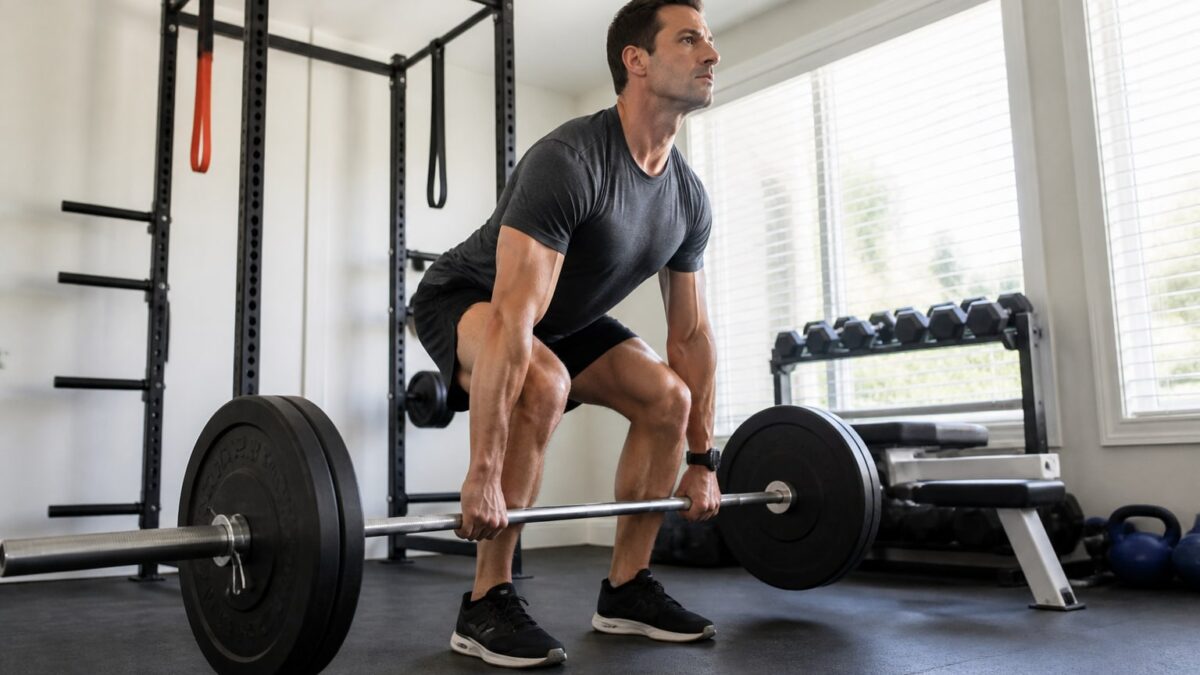
You’ve been lifting the same weight for weeks and the doubt keeps nagging at you: do I move up now or wait? It’s one of the most common questions in any gym, regardless of level. And the answer doesn’t depend on how many weeks you’ve been training, but on how your body moves under load.
This article is for you if you train strength regularly, whether at home, outdoors or in a gym, and want to progress without relying on intuition or on what the person next to you is doing. It applies equally to those just starting out and to those who have been training for years and feel stuck.
Why technique comes before weight
Lifting load without mastering the movement pattern is the fastest way to accumulate an overuse injury. A study by Schoenfeld et al. (2017, Journal of Strength and Conditioning Research) on hypertrophy and training volume already pointed out that technical control determines how much useful stimulus the muscle receives, not just the weight moved. More kilos with poor execution does not equal more progress.
Moreover, technique is the only thing you can control 100%. The weight you “should” be moving depends on genetics, history and recovery. Execution does not.
The objective signs that you have mastered an exercise
Before adding weight, review these four signals. They are verifiable, not vague sensations.
Full range of motion
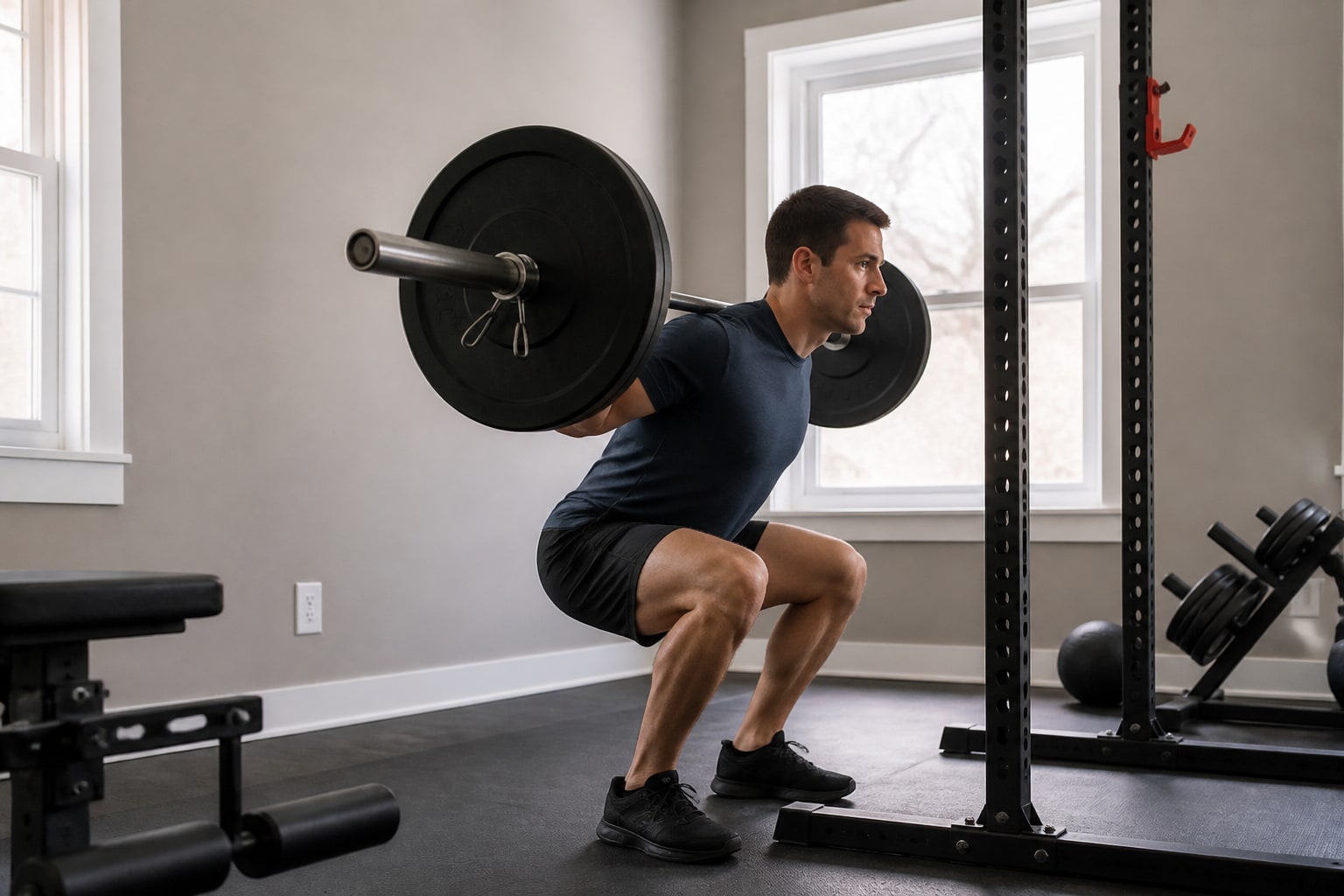
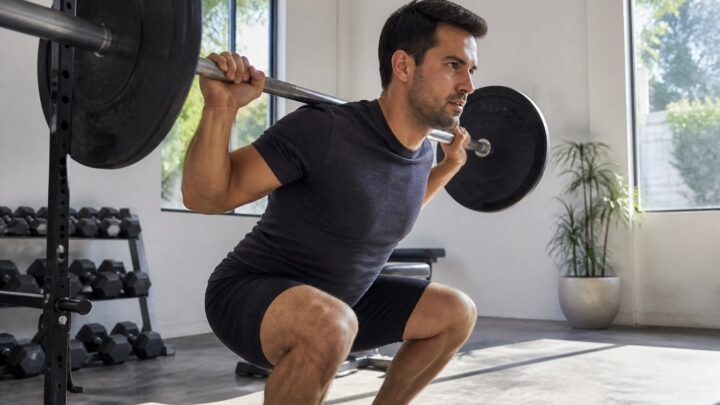
You must reach the full joint range of the exercise without shortening it. In a squat, that means hips below the knee line (or close to it, depending on mobility). In a bench press, the bar touches the chest without bouncing. If you cut the range to “hold on” to the weight, you are not ready to go up.
Eccentric control
The lowering phase should last between 2 and 3 seconds, without sudden drops. If during the negative phase you lose control and the weight “falls” instead of descending, the nervous system does not yet master that load. Eccentric control is, in fact, the most reliable marker before adding kilos.
Core stability
The trunk must not move involuntarily: no excessive lumbar arching in an overhead press, no hip rotation in a lunge. If you need to hold your breath excessively or seek extra support to avoid losing balance, the current weight is already at its limit.
Absence of compensations
Knees caving inward in a squat, elbows flaring in a bench press, back rounding in a deadlift. These compensations are the clearest warning that the body is “stealing” help from other joints because the load exceeds your real technical capacity.
Quick checklist: are you ready to lift more or not?
Use this table before every session in which you plan to progress.
| Signal | What it means | How to check it |
|---|---|---|
| Full range | Joint range without cuts | Film yourself from the side with your phone |
| Eccentric control | 2-3 second lowering without drops | Count mentally during the negative phase |
| Stable core | Trunk without swaying or arching | Watch the lower back in the video |
| No compensations | Joints aligned throughout the range | Check knees, elbows and hips in the video |
| Stable RPE | Perceived exertion between 6 and 7 in the last sets | Apply the RPE scale after each set |
If you meet all five in the last two consecutive sessions, you can increase load. If even one fails, keep the weight for one more week.
How to apply progressive overload without skipping steps
Progressive overload is not just “adding kilos every week”. It is a system with several avenues: weight, repetitions, sets, rest or execution speed. If technique is consolidated, the recommended progression is a 2.5-5% increase in upper-body exercises and 5-10% in lower-body exercises, never more. This figure connects with the logic of the 10% rule applied to load, originally designed for running volume but extrapolable as a principle of conservative progression.
By level:
- Beginner: increase weight only when you complete all planned repetitions with RPE ≤7 for two sessions in a row.
- Intermediate: alternate weeks of adding weight with weeks of adding repetitions, to give the nervous system time.
- Advanced: use microloads (0.5-1 kg plates) when the standard jump on the machine or bar is too large.
Common mistakes when lifting heavier in the gym
- Increasing by calendar, not by criteria. Thinking “I’ve been on the same weight for three weeks, time to go up” without checking technique.
- Comparing loads with another person. Relative strength depends on levers and experience; it is not a ranking.
- Ignoring joint pain by confusing it with normal muscular fatigue. If there is discomfort in a joint, not in the muscle belly, stop and evaluate.
- Increasing several exercises at once. Progress one or two movements per session, not the whole workout at once.
- Not recording the data. Without noting weight, sets, repetitions and RPE, it is impossible to know whether the plateau is real or perceived.
If you have a recent injury, a herniated disc, diagnosed joint problems, or are in the second or third trimester of pregnancy, consult your doctor or physiotherapist before applying any load progression. Technique may be perfect and overload still not be indicated at that time.
What to do tomorrow
- Record your next squat or bench press set on video, from the side, with your phone propped at hip height.
- Apply the RPE scale after each set and note it alongside the weight and repetitions in a notebook or app.
- If all five signals in the table are met in your next session, increase just one exercise, by 2.5-5% for upper body or 5-10% for lower body.
FAQ
How do I know if I’m ready to lift heavier in the gym?
If you complete the full range of motion, control the eccentric phase in 2-3 seconds, keep your core stable and show no joint compensations for two consecutive sessions, you are ready. The RPE of your last sets should hover around 6-7, not 9-10.
What is safe progressive overload?
It is the gradual increase of weight, repetitions or sets while respecting technique, with increments of 2.5-5% for upper body and 5-10% for lower body. Evidence on exact progression rates varies by person and exercise, so these ranges are guidelines, not fixed rules.
How long should I keep the same weight before increasing?
There is no universal number. Some beginners progress every 1-2 weeks, others take 3-4. It depends on training frequency per muscle group, something we cover in detail in this analysis on weekly frequency.
Is it bad to lift heavier even if technique isn’t perfect?
Yes, it increases the risk of overuse injury and of consolidating faulty movement patterns that are later hard to correct. It is preferable to master the current weight with good execution before advancing.
Does the RPE scale work for all levels?
Yes, it works just as well for beginners as for advanced lifters, because it measures perceived exertion, not an absolute strength value. It is especially useful when you don’t have a heart rate monitor or power meter at hand.


0 comments · Comment