Muscle soreness: what it is, how long it lasts, and whether you should train through it
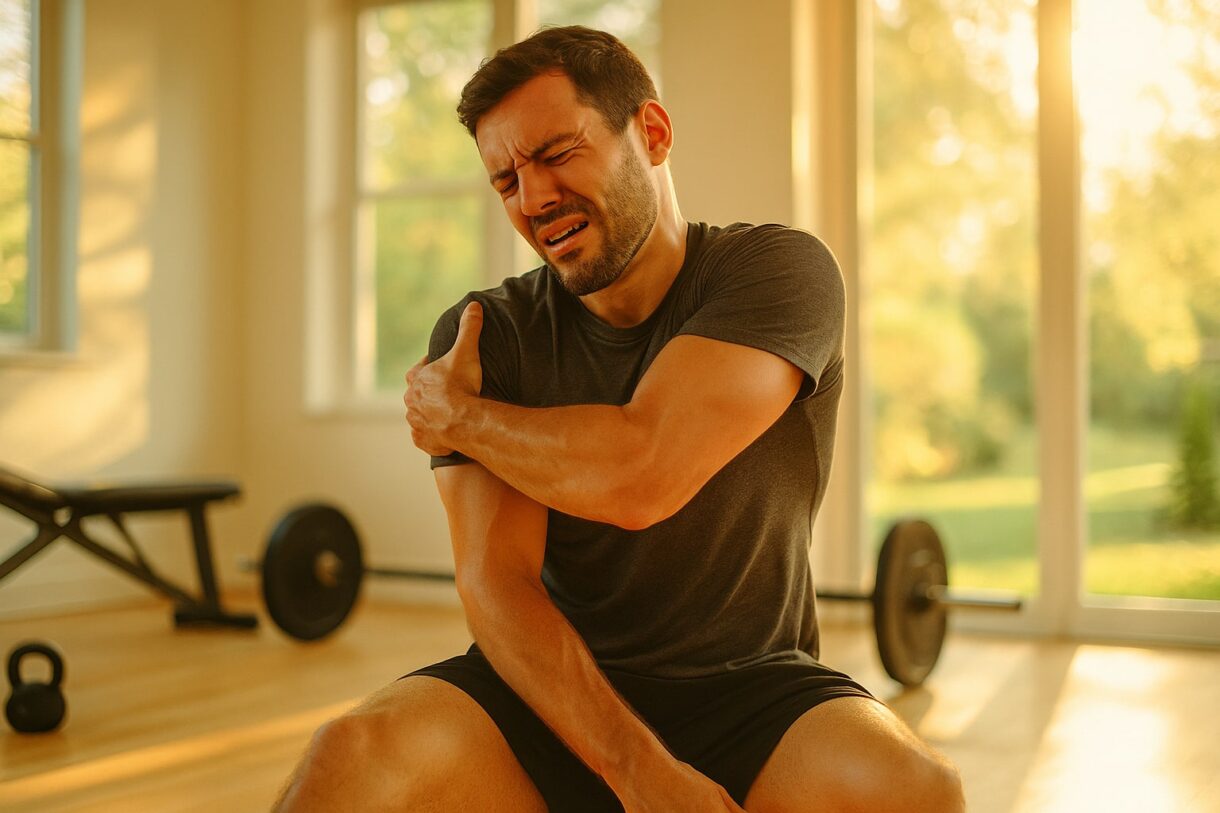
You get up the morning after a leg session and going down the stairs is an ordeal. On the third day, when you thought you were over it, the pain gets worse. That’s muscle soreness, and although everyone has suffered it, almost nobody really knows what happens inside the muscle or what to do about it.
This guide is for you if you train recreationally, have returned to exercise after a break, or are adding new exercises to your routine. Level: beginner and intermediate, although advanced athletes also get hit when they change the stimulus.
What muscle soreness is
Muscle soreness is what the scientific literature calls DOMS (Delayed Onset Muscle Soreness). It is the pain, stiffness and tenderness that appears hours after an effort your muscle isn’t accustomed to.
It doesn’t show up during the exercise or right after it. It takes time. Hence the “delayed” in the name.
Why it appears: goodbye to the lactic acid myth
For decades it was repeated that muscle soreness was lactic acid crystals lodged in the muscle. False. Lactate clears from the blood in less than an hour after exercise, so it cannot explain pain that starts the next day.
What happens, according to current evidence, are microdamage to the muscle fibers caused mainly by eccentric contractions (when the muscle lengthens under tension: lowering the weight in a squat, running downhill). These micro-tears trigger a local inflammatory response that sensitizes pain receptors. It is this that hurts, not the damage itself.
Reviews such as that of Hyldahl and Hubal (2014, Muscle & Nerve) place the origin in mechanical damage and the subsequent inflammation, not in metabolic residues.
How long muscle soreness lasts
The typical timeline of DOMS is fairly well described:
| Time after exercise | What you notice |
|---|---|
| 0–12 h | Nothing or mild stiffness |
| 12–24 h | Pain and tenderness to touch begin |
| 24–48 h | Peak pain, maximum stiffness |
| 48–72 h | Gradual improvement |
| 72–96 h | Residual or resolved |
If you have more than 5–7 days of intense pain, localized to a specific point, with marked swelling or clear loss of strength, it is not normal soreness. See a doctor or physiotherapist.
Can you train with muscle soreness?
It depends on the degree. A simple rule using a pain RPE (0 = none, 10 = unbearable):
- 0–3: train normally. You may even perform better than you expect.
- 4–6: train, but at lower intensity or switch muscle group. If it was legs, do upper-body push or pull.
- 7–10: active rest. Walking, very easy cycling, mobility work. Forcing it here speeds nothing up and increases the risk of poor technique.
The evidence is consistent: training with moderate soreness does not worsen recovery or cause further damage, provided technique doesn’t deteriorate. What does drop is performance: less maximal strength, less power, reduced range of motion. If you had a key session of heavy sets or high loads, move it.
To adjust intensity by feel when you don’t trust your heart rate monitor, this guide on RPE will help.
How to get rid of muscle soreness: what works and what doesn’t
Spoiler: there is no way to “remove” it quickly. But some things help.
With some supporting evidence:
- Gentle movement: walking, pedaling without resistance, swimming. It increases blood flow and reduces the feeling of stiffness.
- Massage: a review by Dupuy et al. (2018, Frontiers in Physiology) ranks it among the most effective interventions for reducing perceived DOMS.
- Compression garments: modest but consistent effect.
- Adequate sleep: 7–9 h. Poor sleep prolongs recovery.
Limited or mixed evidence:
- Ice baths or contrast therapy: they relieve the sensation, but may interfere with long-term muscle adaptation if overused.
- Static stretching: it does not prevent or cure soreness. It may relieve a momentary feeling of stiffness.
- Anti-inflammatories (ibuprofen and similar): they reduce pain, but there is evidence that they interfere with muscle repair. Don’t use them routinely to train through soreness.
Supplements with some backing:
- Caffeine (3–5 mg/kg before exercise): may reduce subsequent DOMS.
- Omega-3 (1–2 g/day of EPA+DHA): modest effect on inflammation.
- Creatine monohydrate (3–5 g/day) doesn’t “remove” soreness but improves recovery between sessions.
How to prevent muscle soreness
It can’t be eliminated completely, but its intensity can be reduced.
- Gradual progression of load. This is where the 10% rule comes in: don’t increase volume or intensity by more than that percentage per week.
- Specific warm-up: 5–10 minutes including the movement pattern you’re about to perform.
- Introduce new exercises with fewer sets and less weight. The first time you do Romanian deadlifts or lunges, don’t go to failure.
- Repeat the stimulus: the repeated bout effect is powerful. The second time you perform an exercise, the soreness is much lower. The third time, almost nil.
Common mistakes
- Thinking soreness = good training. No. You can progress without pain, and you can be sore after a mediocre session. It is not the indicator.
- Repeating the same hard workout every 48 h in search of “breaking fibers”. That accumulates fatigue, not adaptation.
- Taking ibuprofen preventively. Bad idea. It masks pain and slows repair.
- Stretching hard on a severely sore muscle. It can increase damage if you pull on tissue that is already sensitized.
- Not eating enough protein after a session that wrecks you. The usual range: 1.6–2.2 g/kg/day spread over 3–4 meals.
Warnings: if you have a muscle disorder, are pregnant, have had a recent injury, or notice very dark urine after intense training (possible rhabdomyolysis), consult your doctor before applying any of this.
What to do tomorrow
- If you wake up with soreness at 4–6 out of 10: do 20–30 minutes of walking or easy cycling and move your joints. No HIIT.
- If you trained legs and tomorrow was legs again: switch to upper body or core and move the leg session 24–48 h.
- If you’ve had constant soreness for weeks: you’re progressing too fast. Reduce volume by 20% next week and rebuild.
Frequently asked questions
Does soreness mean I’m gaining muscle?
Not necessarily. Muscle damage is one of the stimuli for hypertrophy, but not the main one. Mechanical tension and effective volume matter more. You can grow without soreness.
Does drinking sugary water remove soreness?
No. It’s an old myth based on the lactic acid theory (now discarded). Stay well hydrated, but sugar does nothing specific against DOMS.
Why does it hurt more on the second day than the first?
Because the inflammatory response takes time to build. The peak sensitization of pain receptors arrives 24 to 48 h after the effort, not right at the end.
Is it normal to never get sore?
Yes, if you’ve been on the same routine for a long time. The repeated bout effect protects the muscle. If you want to feel it again, add a new exercise or a more eccentric one.
Can I run with sore calves?
If the pain is mild (≤3/10), yes, gently and briefly. If it’s moderate or high, better to walk or cycle. Running with your stride altered by pain is a fast route to overload injuries in the shin or fascia.
Fitness Healthy Living #agujetas #dolor muscular #DOMS #Entrenamiento #recuperación


 Everything you need to know about muscle memory
 Entrenamiento HIIT: 5 ejercicios para hacer en casa
 Combinar entrenamiento en casa y al aire libre
Comentarios cerrados