Trail vs asphalt: what changes in training, footwear and recovery
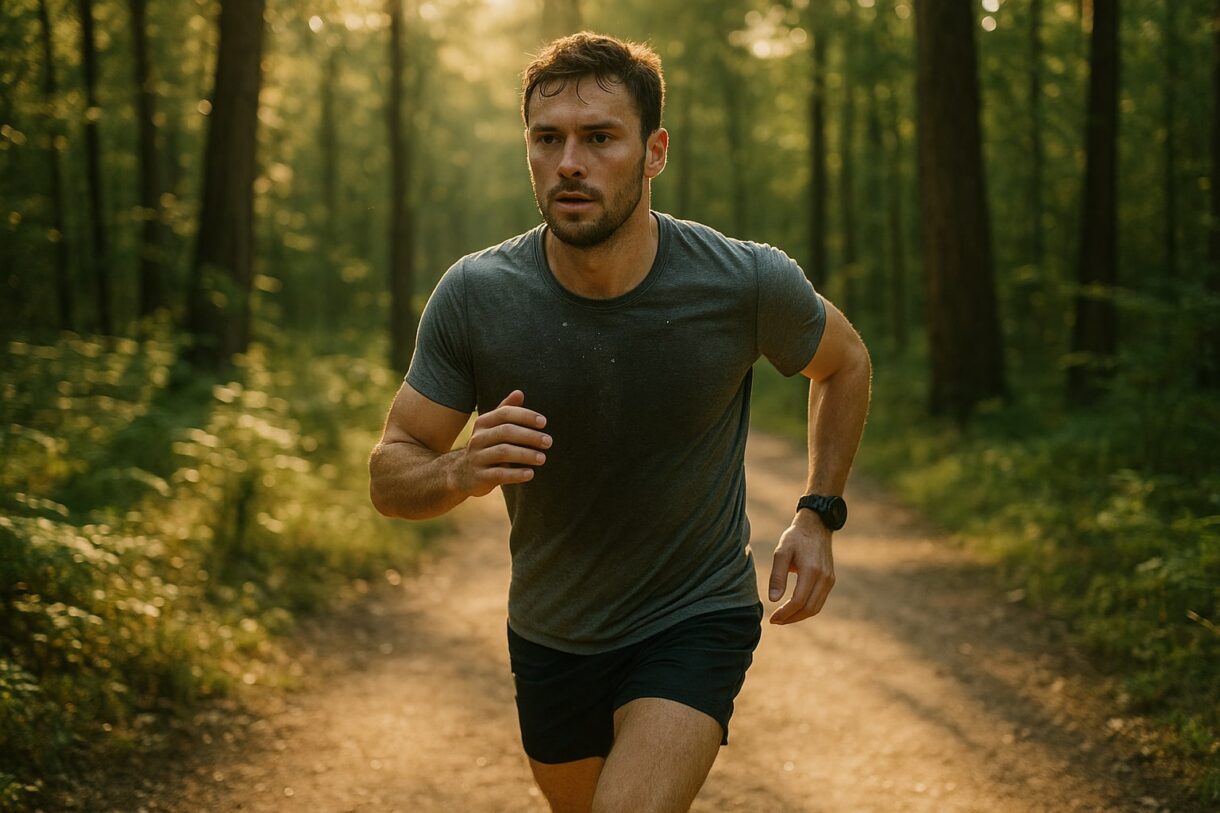
You’ve been running in the park for months when a friend suggests a run in the mountains. You agree, thinking it’s “the same thing but with hills.” Two hours later you’re back with trashed quads, wobbly ankles and the feeling you’ve run twice as far. Normal: trail and asphalt share the movement, but not much else.
This guide is for intermediate runners (you already run 25–40 km a week) who want to understand what changes when moving from road to mountain, or the other way round. If you’re a complete beginner, before getting into trail it’s wise to have a minimum base of 3–6 months of running on the flat.
What really differs between trail and asphalt
The surface is only the tip of the iceberg. Here are the variables that truly change your training, your footwear and your recovery.
| Variable | Asphalt | Trail |
|---|---|---|
| Surface | Uniform, hard | Irregular, variable |
| Impact per stride | High and repetitive | Lower but multidirectional |
| Average gradient | 0–2% | 3–15% (or more) |
| Average pace | 4:30–6:00 min/km | 6:00–9:00 min/km |
| HR at the same effort | More stable | More variable (climbs/descents) |
| Muscle damage after 1h | Moderate | High (especially on descents) |
| Joint risk | Knee, shin | Ankle, knee on descents |
Surface and impact
On asphalt each stride is almost identical to the previous one. Vertical impact repeated thousands of times: between 2 and 3 times your body weight per footfall, according to the work of Nigg et al. published in Sports Medicine. This stresses the shin, knee and plantar fascia in a very predictable way.
On trail the impact per footfall is lower (the ground absorbs part of it), but lateral and rotational forces appear. The ankle works in planes that asphalt barely uses. That’s why a shin overload is more typical of asphalt, while sprains and peroneal tendinopathies are more of the mountains. If you notice shin discomfort, this article on how to tell shin splints from a stress fracture may interest you.
Gradient and energy expenditure
Running one flat hour at a comfortable pace can cost around 600–700 kcal. The same hour in the mountains with 400–600 m of elevation gain easily rises to 800–1,000 kcal, even if you walk part of the climbs. The cardiovascular cost rises quickly on climbs; the muscular cost, on descents.
Shoes: why one pair isn’t right for everything
Road shoes are designed to cushion repeated vertical impact in a straight line. Trail shoes are designed to grip, protect and stabilise on uneven terrain.
Key differences:
- Lugs: 1–2 mm on asphalt, 3–6 mm on mixed trail, 6–8 mm on technical mountain or mud.
- Midsole: softer and higher on asphalt (30–40 mm), firmer and lower on trail (20–30 mm) to provide stability.
- Reinforced toe cap (rock plate): only on trail, to protect from stones.
- Upper: breathable mesh on asphalt; reinforcements and protection on trail.
- Drop: similar in both (4–10 mm), although many trail models lower the drop to improve proprioception.
Brands with solid offerings in both worlds: Salomon, Hoka, Brooks, Asics, La Sportiva, Scarpa. To start on trail you don’t need the most technical shoe: a “light trail” model such as the Hoka Challenger, Salomon Sense Ride or Brooks Divide will serve you well on tracks and non-extreme trails.
Running technique: what changes in the mountains
On asphalt technique tends to be cyclical and automatic. On trail you have to look at the ground 2–3 metres ahead and adjust every step.
Key technical points on trail:
- Shorter, more frequent stride (high cadence, 170–180 spm) to react better.
- Arms wider for balance, not tight against the body.
- Climbing: body slightly forward, short steps, don’t mind walking if your pulse spikes. Power-walking on gradients >15% is usually more efficient than jogging.
- Descending: knees slightly flexed, torso slightly forward (not leaning back, even though instinct tells you to), active footfall. Descents are what most destroy the quads because of the eccentric work.
How to move from asphalt to trail without breaking yourself
If you’re coming from asphalt, your cardiovascular engine is trained but your ankles, hips and quads in eccentric work are not. Progress slowly, following the 10% rule for increasing load.
Indicative plan (4–6 weeks):
- Replace one weekly run with a run on mixed terrain (forest track, easy trail).
- Start with 40–60 min and moderate elevation gain (200–300 m D+).
- Add specific strength work: Bulgarian split squats, lunges, calf raises, ankle work on a bosu or unstable surface. 2 sessions a week of 20–30 min.
- From week 3–4 onward, progressively increase distance and elevation.
Recovery: why trail leaves you more wrecked
After a long mountain run, muscle damage (measured by blood CK) is greater than after the same duration on asphalt, especially due to the eccentric work of descents. This translates into more DOMS, more recovery days and a higher risk of overload if you chain sessions together.
What works (with reasonable evidence):
- Sleep: 7–9 hours. It’s the variable with the greatest impact on recovery.
- Protein: 1.6–2 g/kg/day spread over 3–5 meals.
- Gentle mobility and walking the following day.
- Active recovery (a very easy 30–40 min run at RPE 3–4) 48 h later.
What has limited evidence: cold water immersion, compression socks, massage. They may help with subjective perception, but they don’t clearly accelerate muscle recovery.
After a hard mountain run, plan on 48–72 h without intervals or long runs. If you want to better understand what’s happening to you on those days, here is a guide on what DOMS are and whether it’s worth training with them.
Common mistakes when changing terrain
- Using road shoes on technical trail. Risk of slipping and of foot punctures.
- Keeping road pace on climbs. It will burn you out before halfway.
- Braking downhill with the torso leaning back. It multiplies the impact on knee and quads.
- Chaining two long trail runs without enough rest. Accumulated muscle damage sharply raises the injury risk.
- Ignoring ankle and hip work. Trail demands lateral stability that asphalt doesn’t train.
If you have a previous knee, ankle or fascia condition, consult a physiotherapist before taking on technical terrain.
What to do this week
- Check your shoes: if you’re going to try trail, get a specific model even if it’s mid-range.
- Add two 15-min sessions of leg and ankle strength to your week.
- Plan a first short outing (45–60 min) on a track or easy trail, at a comfortable pace (RPE 5–6), without obsessing over the watch.
FAQ
Can I run trail in road shoes?
On a dry, non-technical forest track, occasionally, yes. On trails with stones, roots or moisture, no: the grip is insufficient and the sole doesn’t protect against punctures. The risk of falling and of injury rises considerably.
Do you run slower on trail? How much?
Yes. At the same perceived effort, on trail you may go between 1 and 3 minutes/km slower than on asphalt, depending on the gradient and the technicality of the terrain. It’s normal and doesn’t indicate a loss of fitness.
Is running in the mountains better for the knees?
It depends. The repeated vertical impact is lower than on asphalt, which relieves certain overloads. But descents stress the quads and the patellofemoral joint a lot. If you have runner’s knee, long descents can make it worse.
How many trail sessions a week are reasonable?
For someone combining both terrains: 1–2 weekly trail sessions are usually enough, leaving 48–72 h between long mountain runs. Going beyond that without a prior base greatly increases the risk of overload.
Do I need poles to start on trail?
Not for short outings or with moderate elevation. They start to make sense on routes with more than 800–1,000 m of elevation gain or in ultras. If you use them, learn the technique first: used badly, they get in the way more than they help.
Running Healthy Living #calzado running #recuperación deportiva #running en montaña #técnica de carrera #trail running


 Everything you need to know about muscle memory
 Entrenamiento HIIT: 5 ejercicios para hacer en casa
 Combinar entrenamiento en casa y al aire libre
Comentarios cerrados