Pelvic floor and strength training: what you need to know
Find out whether you can do strength training with a weak pelvic floor, what the evidence says about squats and deadlifts, and when to see a specialised physiotherapist.
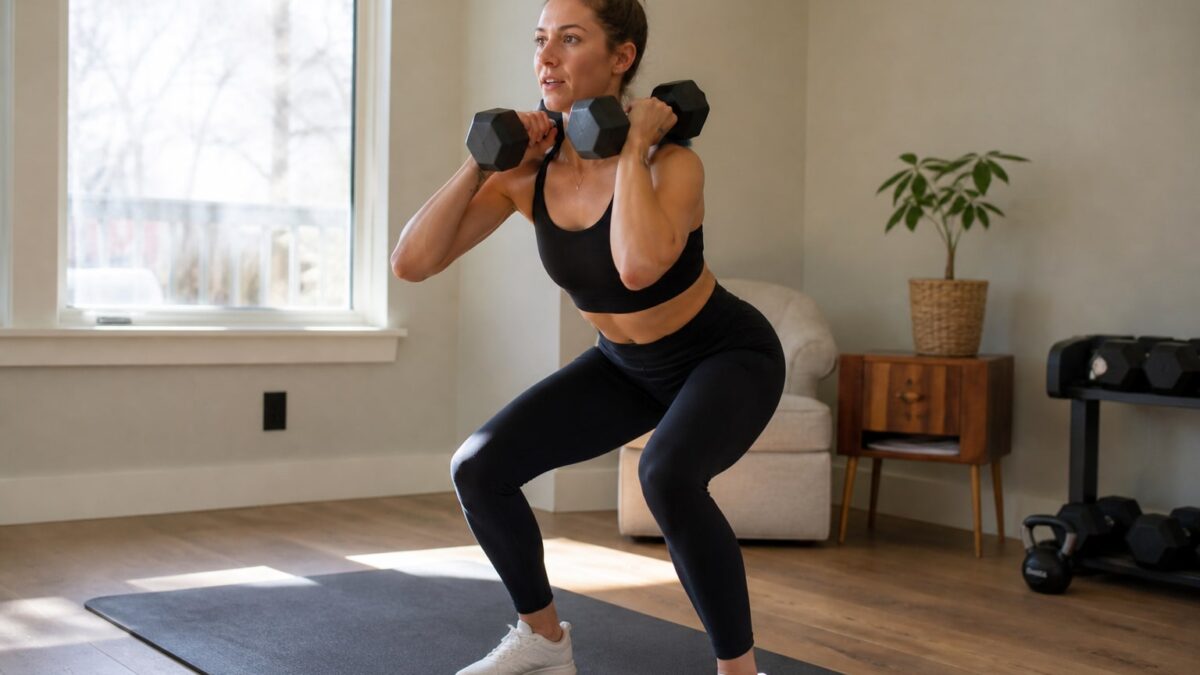
You lift weights, do a loaded squat and notice some urine leakage. Or someone simply told you that “weights aren’t for you” after giving birth. Many women who do strength training have this doubt and can’t find clear answers.
This article is aimed at beginner to intermediate women who do strength training, whether or not they have had children, and who want to know if they can keep lifting weights without harming their pelvic floor. It is also useful for those who coach these women and need criteria based on evidence, not myths.
What is the pelvic floor and why does it matter in strength training?
The pelvic floor is a group of muscles and connective tissue that supports the bladder, uterus and rectum. It works together with the diaphragm and the transverse abdominis to manage intra-abdominal pressure. When you lift weights, that pressure rises. If the pelvic floor does not manage it well, symptoms appear: urine leakage, a feeling of vaginal heaviness or lower back discomfort.
The good news: a trained pelvic floor tolerates pressure, it does not avoid it. The goal is not to “protect” the pelvic floor by avoiding effort, but to prepare it to withstand it.
Warning signs to watch for during training
Not every sensation is cause for concern, but some do require attention.
| Sign | What it may indicate | What to do |
|---|---|---|
| Urine leakage when lifting weights | Weakness or incoordination of the pelvic floor | Reduce the load and consult a specialised pelvic floor physiotherapist |
| Feeling of a bulge or vaginal heaviness | Possible pelvic organ prolapse | See your doctor before continuing to train with heavy loads |
| Persistent pelvic or lower back pain | Poor management of intra-abdominal pressure | Review breathing technique and reduce volume |
| Bulging along the midline of the abdomen | Abdominal diastasis | Assess with physiotherapy before high-pressure exercises |
| Occasional mild discomfort with no other symptoms | Normal with loads close to your maximum | Keep an eye on it, without alarm |
Squats, deadlifts and leg press: what does the evidence say?
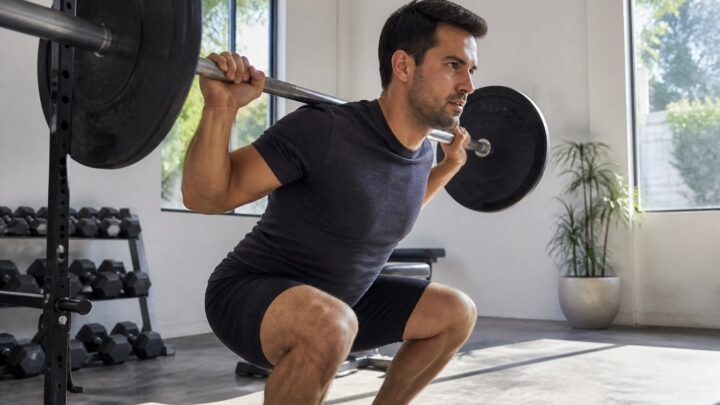
Squats and the pelvic floor
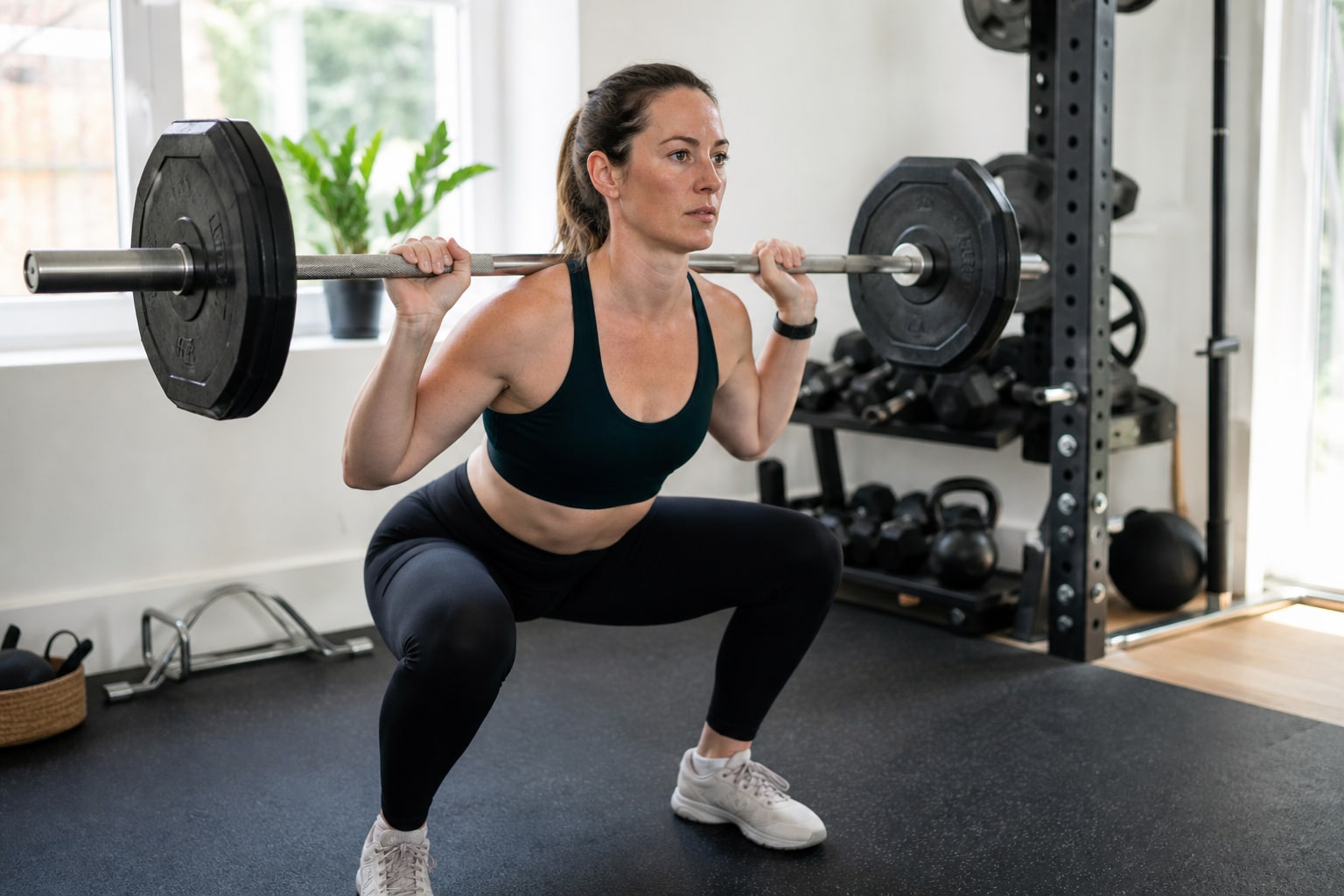
Squats do not damage the pelvic floor by themselves. A study by Bø K and Nygaard IE, published in Sports Medicine (2020), reviewed the relationship between intense physical activity and pelvic floor dysfunction and concluded that well-performed strength training is not a risk factor per se. The problem appears when breathing technique is incorrect or the load is progressed too quickly.
Deadlifts and the pelvic floor
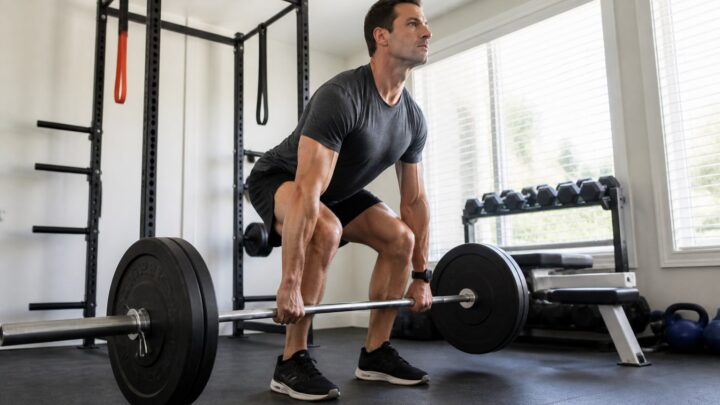
The deadlift generates more intra-abdominal pressure than the squat because it involves a phase of maximal effort with a loaded spine. Here technique before weight is key: if you do not control your breathing or pelvic position, you are not ready to add kilos, regardless of your strength in other exercises.
Leg press and the pelvic floor
The leg press machine also raises abdominal pressure, especially in deep ranges of hip flexion. Limited evidence suggests that keeping the knees above hip level in very flexed positions may increase the load on the pelvic floor in women with prior weakness.
Breathing and the pelvic floor: the technique that changes everything
Breathing is the most underrated tool on this topic. The general recommendation: exhale on effort (when lifting the weight) and avoid prolonged Valsalva manoeuvres if you have a history of dysfunction. This does not apply in the same way to maximal lifts in powerlifting, where controlled Valsalva has its place, but it is the starting guideline for those beginning or recovering.
Hypopressive exercises vs strength training: are they the same?
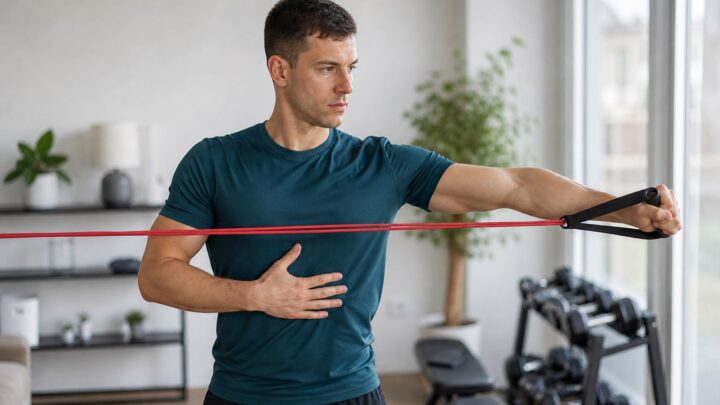
No. Hypopressive exercises seek to reduce intra-abdominal pressure through expiratory apnoea and postural activation. Strength training, by contrast, involves managing pressure, not avoiding it. Both can be complementary, but hypopressives do not replace specific pelvic floor strength work nor prepare you to lift real loads.
Abdominal diastasis and strength training
Having diastasis does not mean giving up strength training. Mota P et al., in Physiotherapy (2018), note that separation of the rectus abdominis is common even in women without children and does not always imply dysfunction. What matters is the tension of the connective tissue, not just the distance between the recti. Working the transverse abdominis and progressing the load gradually is usually more useful than avoiding flexion-based abdominal exercises altogether.
Urinary incontinence and sport: when to consult
If urine leakage occurs in more than one exercise, persists week after week or is accompanied by pain, consult your doctor or a physiotherapist specialised in the pelvic floor. It is not something you should “normalise” just because it is common among women who train.
Common mistakes or contraindications
- Avoiding strength training altogether out of fear, when what is needed is controlled progression.
- Holding your breath throughout the whole exercise instead of exhaling on effort.
- Returning to pre-pregnancy loads without an adaptation period, which also applies to returning to training after an injury.
- Ignoring urine leakage, thinking it is “normal” because you have had children.
- Doing hypopressives as the only pelvic floor work, without functional strength.
If you are pregnant, have a diagnosed prolapse or have had recent pelvic surgery, consult your doctor before progressing loads in squats or deadlifts.
Practical wrap-up
- Tomorrow, before your next leg session, practise exhaling during the effort phase in 3 sets of squats with a light weight.
- If you notice any of the signs in the table above, note it down and book an appointment with a pelvic floor physiotherapist this week, not “when you have time”.
- Reduce the deadlift load by 10–20% for two weeks if you have returned to the gym after childbirth or an injury, then increase progressively.
FAQ
Can I lift weights if my pelvic floor is weak?
Yes, with adapted progression and good breathing technique. A weak pelvic floor is strengthened through specific work, not by avoiding effort. If you have symptoms, start with specialised physiotherapy before heavy loads.
Do squats damage the pelvic floor?
There is no evidence that a well-performed squat damages the pelvic floor. The risk appears with overly rapid progressions or poor breath management, not with the exercise itself.
What are hypopressives and do they help the pelvic floor?
They are expiratory apnoea exercises that reduce abdominal pressure. They can help as a complement but do not replace functional pelvic floor strength work.
Can I do strength training with abdominal diastasis?
In general yes, adapting direct abdominal flexion exercises and prioritising transverse abdominis work. An individual assessment with a physiotherapist helps decide the progression.
When should I see a pelvic floor physiotherapist?
If you have repeated urine leakage, a feeling of vaginal heaviness or persistent pelvic pain during training. It is also advisable postpartum before resuming heavy loads.

0 comments · Comment