Running cadence: is 180 steps per minute for everyone?
The 180 steps per minute figure is repeated like dogma in running, but the number came from a one-off observation, not from a controlled study. We explain which cadence makes sense for your level and how to measure it without obsessing over it.
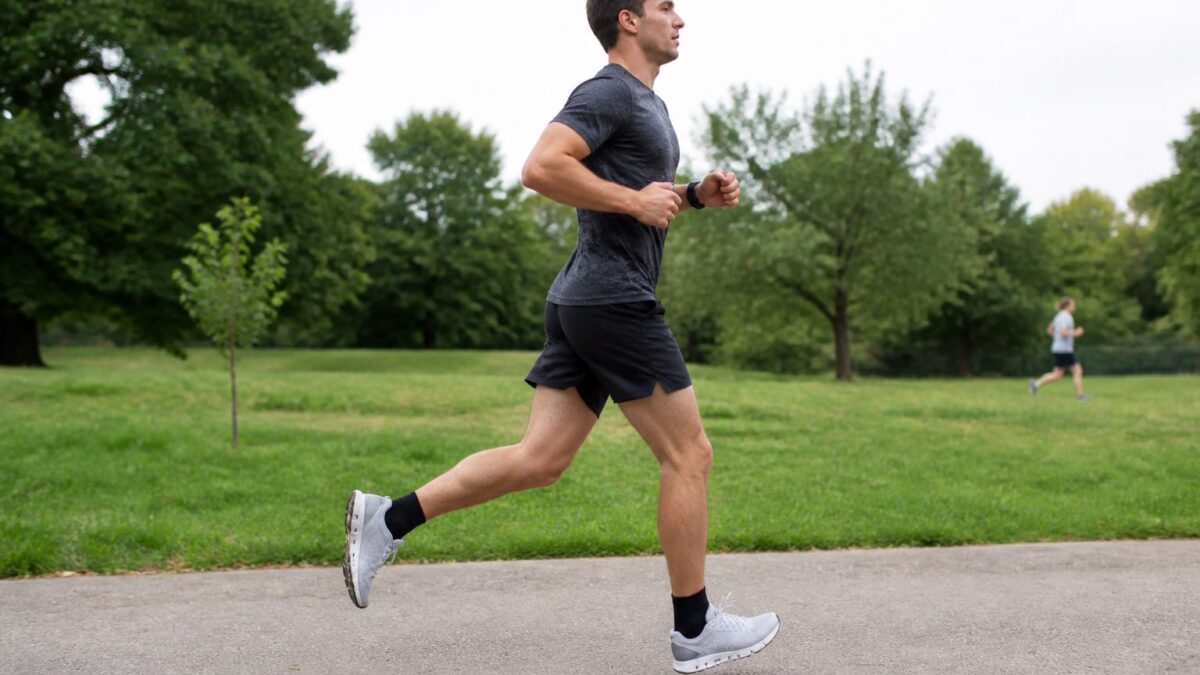
If you run with a GPS watch, you’ve surely seen the alert: “low cadence”. And if you’ve looked up what it means, you’ll have run into the same figure repeated ad nauseam: 180 steps per minute. The problem is that this number has become dogma, and almost nobody explains where it comes from or whether it applies to your case.
This article is for runners of any level who want to understand running cadence without chasing a number for its own sake. If you’re a beginner, the section on how to measure it will interest you most. If you’ve been running for years, you’ll probably care more about the part on injuries and stride length.
What is running cadence and why is it talked about so much?
Cadence is the number of steps you take per minute while running. It is measured by counting both feet, not just one. It is one of the variables most easily recorded with a GPS watch or a phone app, which is why it has gained prominence in recent years.
The reason it gets so much attention is simple: it is related (not always causally) to stride length, joint impact and running efficiency. But a relationship is not the same as a universal prescription.
The origin of the myth: Jack Daniels’ study at the 1984 Olympics
The figure of 180 steps per minute does not come from a randomized clinical trial. It comes from a field observation. The coach and physiologist Jack Daniels, author of Daniels’ Running Formula (Human Kinetics, 2013), counted the steps per minute of distance runners at the 1984 Los Angeles Olympic Games and found that most were around that figure, regardless of their pace.
It is an interesting data point, but it has obvious limitations: the sample was elite athletes, in one specific event, with no control group and no follow-up. Turning that observation into a norm for anyone who goes out to run in the park forces the conclusion beyond what the data allows.
What is the ideal running cadence? What current evidence says
There is no universal ideal cadence. There is a functional range, and that range depends on your height, your pace, your injury history and your current technique. Later research following Daniels, such as the work of Heiderscheit et al. (2011, Medicine & Science in Sports & Exercise), does not seek a magic figure: it studies what happens when you increase your habitual cadence by 5-10%, not when you fix it at 180 no matter what.
That study is relevant because it shows that raising cadence by 5-10% over your own reduces the impact load on the knee and hip. In other words, what matters is not reaching a specific number, but starting from your real cadence and adjusting from there, if adjustment is needed at all.
As a guide, these are the usual ranges by pace:
| Running pace | Approximate cadence (steps/min) |
|---|---|
| Easy jog / recovery | 150-165 |
| Easy to moderate pace | 160-175 |
| Race pace (10K-half marathon) | 170-185 |
| Fast pace / short race | 180-200 |
How to measure running cadence
There are three practical ways, from least to most precise:
- Counting steps manually: count the steps of one foot for 15 seconds and multiply by 8. It is rudimentary but free.
- GPS watch or activity tracker: most current models show it in real time. If you want to know which metrics are really worth watching, you can check which metrics coaches really look at on a GPS watch.
- Phone app with a metronome: some running apps include a beep at the target cadence so you can adjust your step on the go.
Running cadence for beginners, intermediates and advanced runners
Beginner: don’t obsess over the number. Prioritise finishing the session without pain and with controlled breathing (RPE 4-5 out of 10). Measure your cadence once out of curiosity, but don’t correct it yet.
Intermediate: if your habitual cadence at an easy pace is below 160 and you have a history of knee discomfort, try raising it by 5% with a metronome for 2-3 sessions per week.
Advanced: this is where working on cadence as a performance lever makes sense, combined with running technique drills and short intervals at race pace.
Relationship between cadence and stride length
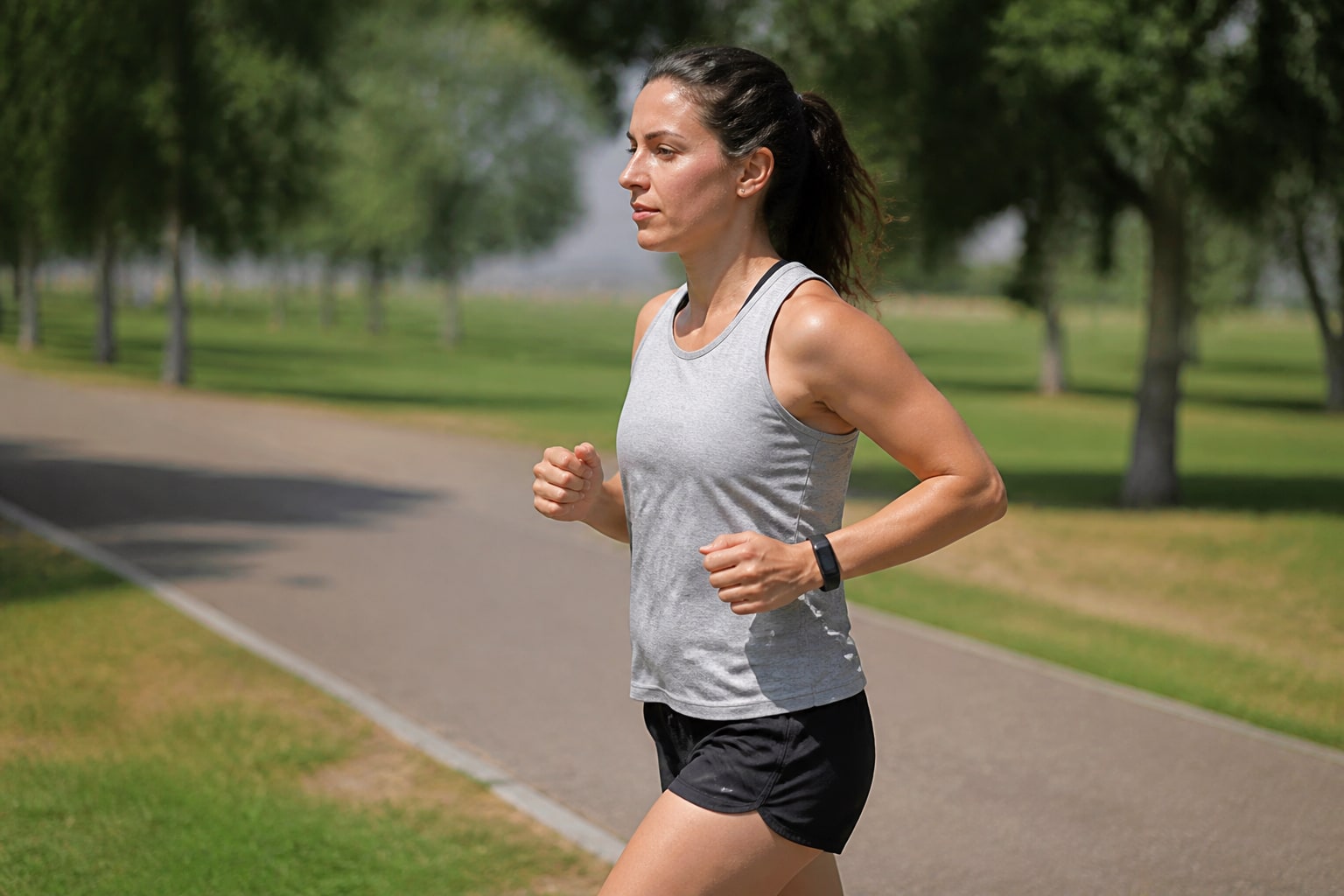
Cadence and stride length are two sides of the same coin: your speed is, mathematically, cadence multiplied by stride length. If you raise your cadence without meaning to run faster, your stride shortens naturally. That is precisely what many technique adjustments aim for: shorter, quicker strides rather than longer, slower ones, because an overly long stride tends to land with the heel well ahead of the centre of mass, which increases braking at each footfall.
Cadence and running injury risk: what the evidence says
Caution is warranted here. The evidence that raising cadence directly reduces injuries is limited: Heiderscheit’s study (2011) measures joint loading, not the long-term incidence of injury. That said, a very low cadence (below 150-155 at a normal pace) is associated in several biomechanical studies with greater impact per stride, which may be one risk factor among others.
If you are coming back from an injury or have recurring discomfort in the shin or plantar fascia, review your training load progression before touching your cadence. You may be interested in how to progress your training load without getting injured by following the 10% rule.
Exercises to increase running cadence
- Short intervals with a metronome: 6-8 repetitions of 30 seconds at a cadence 5% above your habitual one, with 90 seconds of easy jogging between repetitions.
- Low skipping (10-15 metres x 4): improves ground-contact frequency without forcing your stride.
- Gentle 50-60 metre hill sprints: naturally force you to shorten your stride and increase frequency.
Common mistakes when working on cadence
- Forcing 180 steps per minute in every session, even during recovery jogs.
- Changing cadence abruptly instead of a progressive 5-10%.
- Ignoring pain that appears when modifying technique, assuming it is “normal adaptation”.
- Measuring cadence once and never checking it again.
- Copying an elite runner’s cadence without considering differences in height and pace.
If you have a history of injury, pregnancy or any joint condition, consult your doctor or physiotherapist before actively changing your running pattern.
What to do tomorrow
- Go out for a run at your usual easy pace and measure your real cadence with your phone or watch, without trying to change it.
- Compare that number with the ranges in the table in this article to see whether you are well below what is expected for your pace.
- If you decide to adjust it, do so with a 5% increase and only in 2 sessions per week over the next three weeks.
FAQ
What is the ideal running cadence?
There is no single figure valid for everyone. It depends on your pace, height and technique. The 170-185 steps per minute range covers most recreational runners at a moderate pace.
How do you measure running cadence without a GPS watch?
Count the steps of one foot for 15 seconds and multiply by 8. Repeat 2-3 times during the run to get a reliable average.
Are 180 steps per minute mandatory for everyone?
No. It is a reference that comes from observing elite athletes in 1984, not a universal biomechanical rule. Your optimal cadence may be below or above it depending on your case.
Does raising cadence reduce injury risk?
It may reduce impact load on the knee and hip according to Heiderscheit et al. (2011), but the evidence for a direct long-term reduction in injuries remains limited.
How long does it take to notice an improvement after changing cadence?
It varies from person to person and with practice frequency. A 5-10% adjustment is usually integrated more naturally after 3-4 weeks of specific work, twice a week.
0 comments · Comment