The cyclists who have won two grand tours in the same year
We review the history of cycling to learn about those cyclists who won two of the three stage-race grand tours in the same year.

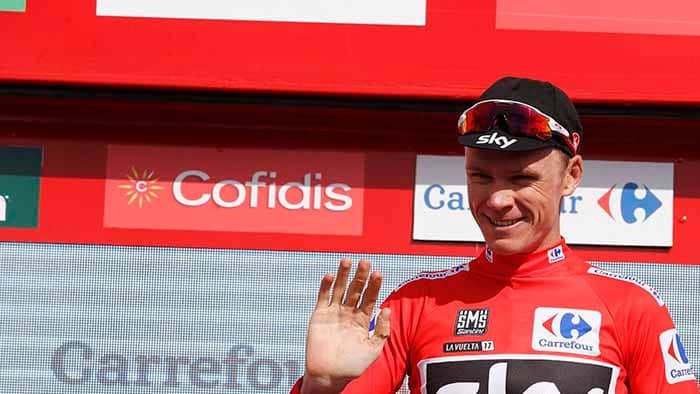
With the victory of Chris Froome in the Tour de France and in the Vuelta a España, this year 2017 has seen an uncommon event: a cyclist winning two grand tours in the same year. Although we may think this is something of what they now call modern cycling, in reality, throughout history, very few cyclists have won two grand tours in the same year.
Apart from Froome, let us now get to know the cyclists who won two of the three grand tours in the same year, whether by achieving a Tour–Vuelta double, a Giro–Vuelta double, or the most common and prestigious double, the Giro–Tour.
Fausto Coppi

The Giro d’Italia and the Tour de France have coexisted since 1909 (the Vuelta would arrive a little later, in 1935, and with wars and economic problems it would not become a stable race until the fifties), but the first cyclist to win both races in the same year had to wait. A great Italian legend had to come along, Fausto Coppi, who after winning his third Giro signed up for his first Tour, with just 8 days of difference between the end of one race and the start of the other.
The feat was not easy for him, since in the first days of the Tour Coppi suffered quite a lot and lost a good deal of time, although he later recovered all of it when the mountains arrived and he beat the second-placed Bartali (also second in the Giro) by more than ten minutes. Three years later, in 1952, Coppi won his fourth Giro and, in his third Tour, secured the victory of his career, this time in grand fashion, winning five stages, including the first finish in history at the legendary summit of Alpe d’Huez.
Jacques Anquetil

The Frenchman Jacques Anquetil is a record-breaking cyclist, as he was the first to win the Tour de France five times. He would also become the first Tour champion who, years later, won a Vuelta a España, in the year 1963, thus achieving victory in all three grand tours, since he already had a Giro to his name. At that time the Vuelta was held in May, so in July Anquetil showed up at the Tour to deny Federico Martín Bahamontes a victory.
After achieving the first Vuelta–Tour double in history, the following year Anquetil would emulate Coppi by completing a Giro–Tour double. The Frenchman rode the Italian race for the fourth time and won his second victory (it should be noted that he took part six times in the Giro and reached the podium every time), and just a week later began a Tour in which he would achieve his fifth and definitive victory. In both races, the time trials were key to the victory of a man who, not without reason, was nicknamed Monsieur Chrono.
Eddy Merckx

Speaking of nicknames, Eddy Merckx was called the Cannibal (and also the Ogre and the Monster) because of the ambition he showed in winning everything. So much so that the Belgian cyclist is the one who has won the most grand tours, in a palmarès featuring more than 500 victories. Logically, this gave him room to complete three Giro d’Italia and Tour de France doubles: the first in 1970, the second in 1972 and the third in 1974, a year in which he also won the World Championship, thus achieving the first Triple Crown in history.
In between, he also managed to achieve the first Giro and Vuelta double in history. It happened in the year 1973, when Merckx took part for the first time in his career in the Vuelta a España to face and beat on Spanish roads two of his great rivals, Luis Ocaña and Bernard Thevenet. Five days after winning his first and only Vuelta, he lined up for a Giro that started in Belgium and took the pink jersey on the first day, which he did not lose for the rest of the race.
Bernard Hinault

The ambition of Eddy Merckx on the bicycle was inherited by a French cyclist, Bernard Hinault. The Badger made his debut in a Grand Tour in the 1978 Vuelta a España, and the result could not have been better: champion in the famous Vuelta of the incidents in San Sebastián, which meant the Vuelta spent a long time without passing through the Basque Country. Shortly afterwards he made his debut in the Tour de France and achieved the same result, emulating Jacques Anquetil, who until then was the only one with a Vuelta–Tour double.
A five-time Tour winner, Hinault would also win the Giro d’Italia three times (in all three of the times he took part, incidentally), and in two of them it coincided with one of his five Tour victories, thus making a double. The first was in 1982 and the second in 1985. That Tour was the last great victory of the French cyclist, definitively equalling Anquetil and Merckx with five overall wins in the French race, thanks to the invaluable help of his teammate LeMond, to whom he would return the favour the following year.
Giovanni Battaglin

So far this list has featured very illustrious names of cyclists known even to those who do not follow cycling: Merckx, Hinault, Coppi, Anquetil… The next one is that of a cyclist less well known to the general public, the Italian Giovanni Battaglin, a cyclist who began racing as a professional in 1973, who reached the podium of the Giro d’Italia in that same edition and who, from then on, was marked as a future champion of it, although glory did not come to him until 1981.
Approaching his 30th birthday, Battaglin would win a Giro d’Italia when he least expected it, since that year he had decided for the first time to ride the Vuelta a España. The Venetian did not fare badly: he took advantage of the absence of the great riders to claim the first major triumph of his career, and got into form so that right afterwards he could win his first and only Giro d’Italia. Three years after emulating Merckx, Battaglin retired but stayed connected to cycling by manufacturing bicycles.
Stephen Roche

And precisely and curiously with one of those Battaglin bicycles our next protagonist was to achieve glory: the Irishman Stephen Roche. Roche, after his terrible 1986 in which he suffered a knee injury that would cause him problems for the rest of his career, had his best year during 1987, managing to emulate Eddy Merckx and become the second cyclist in history (and the last so far) to achieve the Triple Crown: Giro, Tour and World Championship.
Roche began by winning a Giro in which his great rival, his teammate at Carrera Visentini, had to abandon, handing the Irishman the victory on a plate. He then went on to win his first and only Tour de France stealing the yellow jersey from Perico Delgado on the penultimate stage, a time trial in Dijon in which he took a minute out of the Spanish rider. If this double was already more than enough, Roche rounded off the year with his victory in the World Championship, held in Austria.
Miguel Indurain

We remember Miguel Indurain for dominating the Tour de France at will between 1991 and 1995, being the only cyclist to have won it for five consecutive years. But the Navarrese also dared to ride the Giro d’Italia in those years, a race in which he competed against the legion of Italians of the time (Chiapucci, Bugno, Chioccioli, Giovannetti…), to win it on two occasions, 1992 and 1993. In that latter year he nearly achieved the Triple Crown, but Lance Armstrong beat him to it.
The 1992 Giro, the first in history for a Spaniard, he won clearly, leading from the third stage and with more than five minutes’ advantage over the runner-up, Chiapucci. And that year’s Tour he won thanks to his displays in the time trial in Luxembourg and in the stage finishing at Sestriere. On that same summit, in a time-trial climb, Indurain sealed the 1993 Giro in his favour, and a month later he climbed onto the podium on the Champs-Élysées to celebrate his third victory in Paris, ahead of Rominger.
Marco Pantani

In 1994, Indurain could no longer win his third consecutive Giro, and one of those responsible for his failure was a diminutive Italian cyclist named Marco Pantani, whom the tifosi nicknamed The Pirate. The Cesena rider, by then on the Mercatone Uno team, was to reach glory in 1998, when he won the Giro d’Italia and then the Tour de France, becoming the last cyclist to date to achieve this coveted double in the two most prestigious grand tours.
The Giro was not made to measure for Pantani, with little mountain and too much time trialling for his taste, and Zülle seemed the strongest, but on stage 17 Pantani stole the maglia rosa from the Swiss rider and never let it go. Then, in a Tour that started later, to avoid coinciding with the football World Cup, and marked by the Festina affair, Pantani also beat the great favourite, Ullrich, wearing yellow in an unforgettable stage in the Alps, in the rain and fog.
Alberto Contador

The Spaniard Alberto Contador made the news in this year 2017, as he has finally ended his sporting career as a cyclist, with a stage victory on the Angliru as a farewell. His career has been that of a great champion, with its ups and downs, who has won the three grand tours and who, until the one Froome has now achieved, were the last on the list to achieve a double, when in 2008 he took the overall classification of the Giro and the Vuelta a España.
Contador had come off winning his first grand tour, the Tour de France, in 2007, but he could not ride the Tour the following year because his new team, Astana, was banned. Thus, the rider from Pinto focused his efforts on the other two grand tours, in which he could not have made a better debut, winning both. The Marmolada in the Giro, where he donned the pink jersey, and the Angliru in the Vuelta, where he took the victory and pulled on the yellow jersey, were the key moments of these two races.